
Entrepreneur Stories
Orkut: The Rise, Fall And Eventual Death Of Google’s Social Media Arm

Orkut had a strange birth story. Back in the day (not very long ago,) Google was trying to break into the social media world by trying to buy the then popular platform, Friendster, for $ 30 million. However, Friendster was not ready to sell and this move by Google backfired. With no other platform ready for a buyout, Google decided the time had come to open its own platform. Enter Orkut.
The birth of Orkut
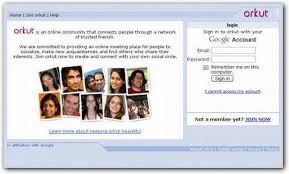
In the initial days of Orkut, it was an invite only platform, where people could join only if they were invited by their friends. While this attracted a trickle of users from North America, a majority of Orkut users were based out of Brazil and India! By July 2004, the ratio of Orkut users was 2 Brazilians to every one North American user, a case study which quickly created a demographic for this social media platform.
Orkut was so popular in countries like Brazil and India, a majority of the population from these countries thought Google was a subsidiary of Orkut and not the other way around. In fact, even the then CEO of Orkut said as much during an interview in 2009, “If you go to those countries (India and Brazil,) they often think that Orkut owns Google. And you talk to people in Brazil, they’re like oh, Google, you mean the subsidiary of Orkut?”
The rise in digitization and use of social media platforms in India and Brazil happened in tandem with the growth of Orkut. However, despite the numbers being increasingly high in these countries, the popularity just did not reach the rest of the world, a problem the makers didn’t think was possible when they launched Orkut.
The growth of this particular site also happened at a time when the middle class sector of developing countries started discovering the internet and could afford desktops. Unfortunately, the reach was just not as high as it was supposed to be and very soon, a short decade after its launch, Orkut started facing massive problems.
The fall of Orkut
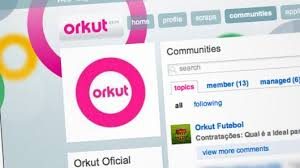
The fall of Orkut fall can be attributed to the rise of other social media networking platforms like Facebook and Twitter. While Orkut did have an early launch edge (it launched a month before Facebook,) it just didn’t see growth the way these other platforms did. The moment Facebook launched, it realised the best way to compete with Orkut was by increasing its user friendly side.
Looking at the massive popularity Orkut had in India, Facebook realised the best way to get a hold in a country with a 2.2 billion population was by introducing user friendly languages, thereby making communication easier. With the rise of Facebook came the subsequent increase in Twitter’s popularity, giving Orkut extremely tough competition.
The final blow of sorts came to Orkut in 2011, when Google’s highly talked about Google Wave started going through a major landslide. A data breach scandal was all that was needed for Google to start losing its edge, a backlash that hit its other subsidiaries as well. Finally, with the severe negative reaction Google kept receiving, the company decided to finally shut down its social media arm, Orkut.
Google decided to shut down Orkut in September 2014, a decade post its launch, attributing this closure to the rise in users of its other platforms, namely Google Plus and Blogger. However, the shift in users to Facebook and Twitter was not cited as a reason, giving Orkut a gallant and respectful exit story.
Orkut’s rise to popularity, failure to keep up with the times and subsequent death is nothing short of a riveting cautionary tale. Stick with the times and grow with the trends. If not, then face the sure axe of death!






A decade ago, the success of a startup was measured largely by its ability to raise capital. Today, a different metric is gaining importance: the ability to generate meaningful exits for investors. Large stake sales by early backers are becoming increasingly common, not because growth opportunities have disappeared, but because India’s startup ecosystem is entering a more mature phase where capital is expected to complete its full cycle from investment to returns.
This evolution is particularly significant for consumer brands that have successfully blended technology, retail, and strong brand-building. Companies that were once viewed as high-risk startup bets are now attracting institutional investors capable of absorbing large transactions. Such developments indicate that these businesses are no longer being valued solely on future potential; they are increasingly being assessed on operational performance, market leadership, and long-term profitability. In many ways, investor exits are becoming a validation of a company’s ability to create lasting enterprise value.
The broader implication extends beyond a single company or investor. Successful exits encourage more global capital to enter India’s startup ecosystem because they demonstrate that liquidity opportunities exist at scale. As more venture-backed companies approach public listings, secondary transactions, or strategic investments, the focus of founders and investors alike may shift from chasing headline valuations to building durable businesses. The next chapter of India’s startup journey will likely be defined not just by the creation of unicorns, but by the creation of companies capable of delivering sustained returns to all stakeholders.

Apple has unveiled the new MacBook Air with M5 chip, starting at $999 for 13-inch and $1,299 for 15-inch models. The MacBook Air M5 boasts a 2nm M5 chip with 12-core CPU, 18-core GPU, and 50 TOPS Neural Engine for seamless AI tasks like real-time translation and 8K editing. Up to 22 hours of battery life, Thunderbolt 5, and Wi-Fi 7 make it the ultimate ultraportable, now 10% thinner at 0.44 inches with fanless cooling.
Key MacBook Air M5 features include Liquid Retina XDR display (500 nits, nano-texture option), 12MP Center Stage camera, and six-speaker Spatial Audio. Colors like new Sky Blue join Midnight and Starlight. Pre-orders are live today, with macOS Sequoia 15.4 enhancing Apple Intelligence and iPhone Continuity for students, pros, and remote workers.
Why buy MacBook Air M5 now? It outpaces Snapdragon X Elite rivals with ecosystem magic and future-proof performance, eyeing top 2026 laptop sales. CEO Tim Cook calls it “more capable than ever.” Visit apple.com for M5 MacBook deals and specs.

Delhi NCR-based gaming startup Zupee has acquired Mumbai-based microdrama platform Vertical TV in a deal valued under INR 40 Cr. This move strengthens Zupee Studio, its short-video arm launched in September 2025, by integrating Vertical TV’s expertise in bite-sized dramas like romance and thrillers.
Facing challenges from India’s 2025 real-money gaming ban, Zupee valued at $1 Bn after raising $120 Mn has pivoted to non-gaming content, including recent layoffs of 40% of its workforce. The acquisition builds on its November 2025 purchase of Australian AI firm Nucanon for interactive storytelling, targeting its 200 Mn+ users with engaging, mobile-first formats.
This deal underscores the rising microdrama trend in India, helping Zupee diversify amid regulatory pressures and compete in the short-video space dominated by quick, shareable content for on-the-go audiences.


