
Stories
Friends Who Founded Companies Together

Starting a company is a really difficult task and it becomes incredibly hard if you are doing it alone. Having a co founder can make the task a little simpler, especially if it is one of your closest friends. Many business experts warn against starting a business with friends, however, the success of the companies mentioned below proved such opinions wrong.
Friends who founded companies together
1) Airbnb
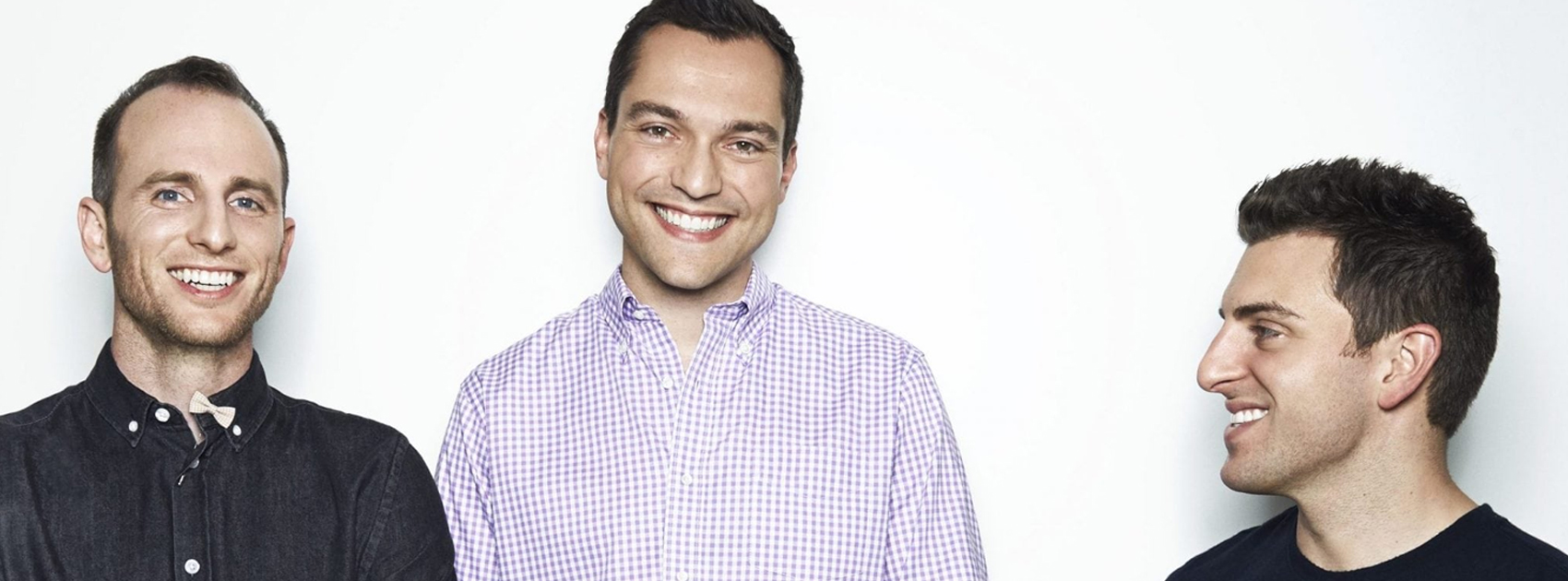 The hugely popular online platform was founded by three roommates, Nathan Blecharczyk, Joe Gebbia and Brian Chesky. Nathan Blecharczyk, who moved to San Francisco, used Craigslist to find a roommate, who turned out to be Joe Gebbia. Brian Chesky, who was Gebbia’s college friend, later moved in with Blecharczyk and Gebbia and the three became close friends. The idea of Airbnb was conceived after the trio realised there is a shortage of hotels in San Francisco. They built a website which allowed people to rent out spaces in other people’s apartments. They also turned their own apartment into a lodging by putting an air mattress in their living room. Eleven years after its launch, Airbnb, which turned its founders into billionaires, is still one of the most used sites in the world.
2) Google
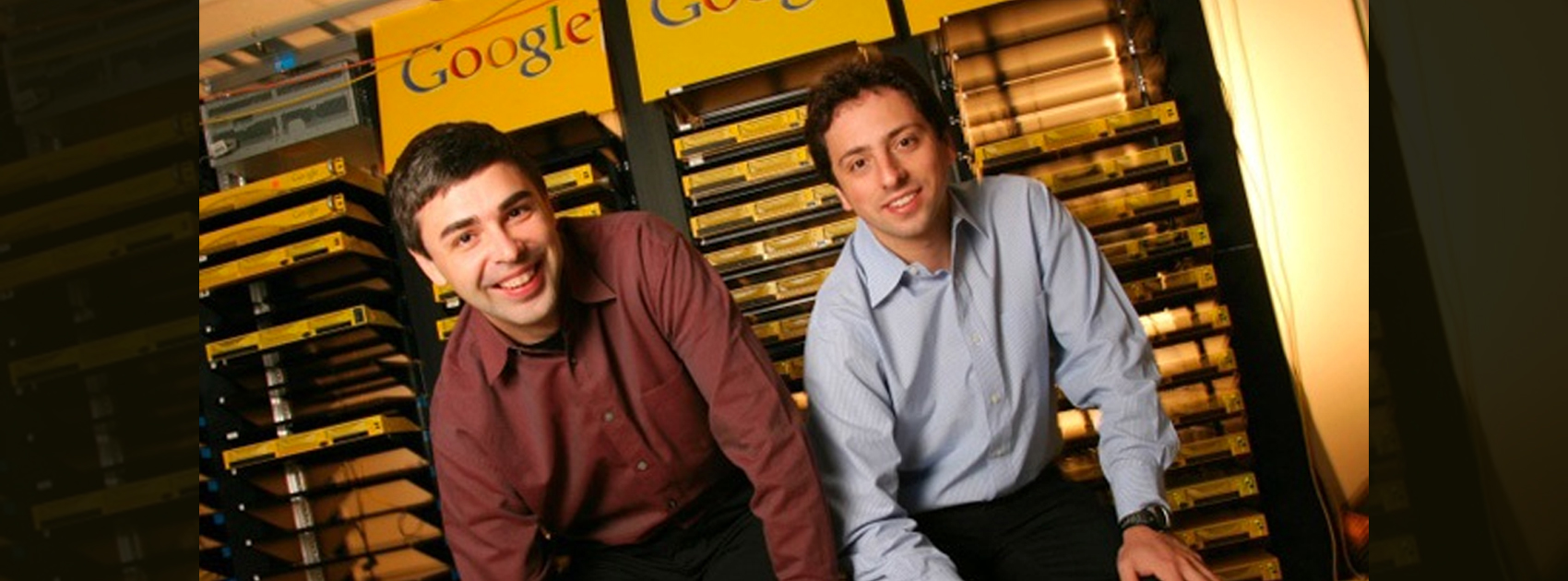
One of the biggest technological companies in the world, Google was founded by two PhD students, Larry Page and Sergey Brin. Page met Brin for the first time at Stanford University, during a campus tour for doctoral students. Not a big fan of each other in the beginning, they became friends while working on a research project together. Their project, The Anatomy of a Large-Scale Hypertextual Web Search Engine, became the foundation of what would soon be called Google. Co founded in 1998, the growth of Google made Larry Page and Sergey Brin two of the richest people in the world.
3) Ben & Jerry’s
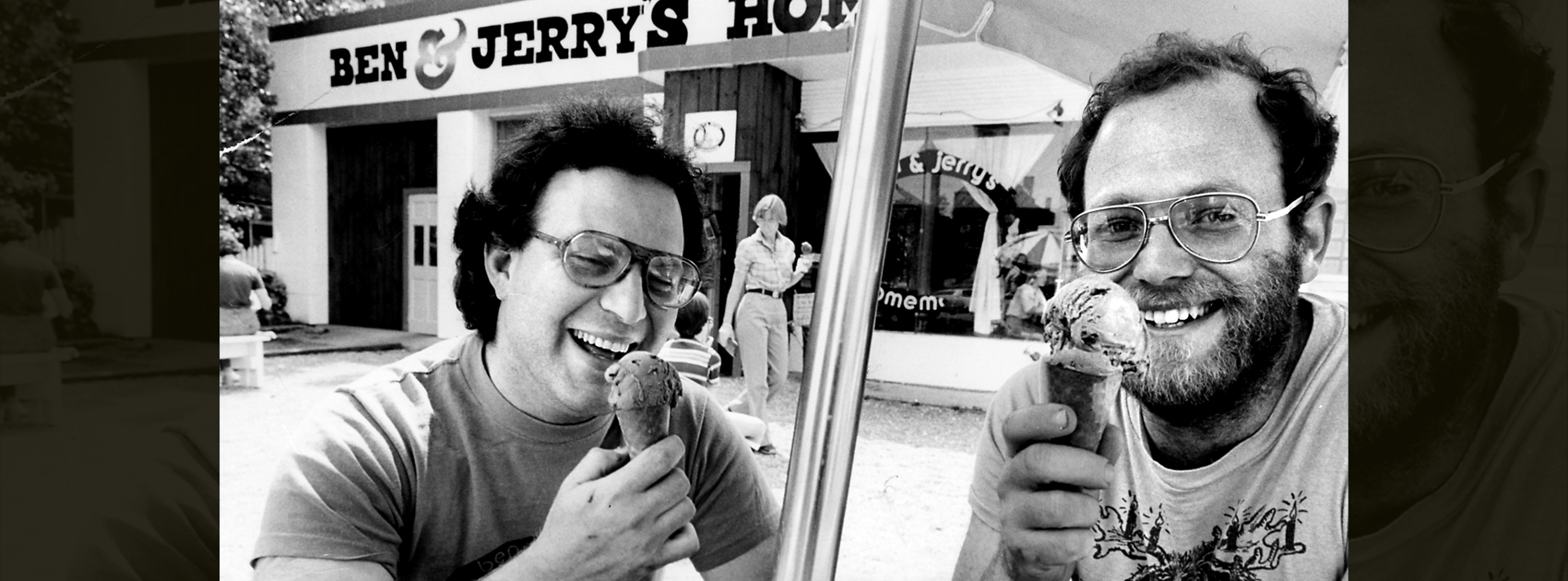 This hugely successful ice cream manufacturing company was founded by Ben Cohen and Jerry Greenfield. Both Cohen and Greenfield were friends since childhood, having met each other during their seventh grade gym class. They both shared a mutual love for food, which prompted them to take a correspondence course in ice cream making. After completing the course, they started their first ice cream shop together in 1978, with an investment of $ 12,000. Forty one years after starting the shop, Ben & Jerry’s is a world renowned million dollar company.
4) Warby Parker
 Warby Parker is an online retailer of prescription glasses and sunglasses, started by Neil Blumenthal, Dave Gilboa, Andrew Hunt and Jeffrey Raider. The four became friends during grad school at the Wharton School of the University of Pennsylvania and shared a common frustration towards expensive prescription glasses. The four friends then started a company to sell highly quality and inexpensive glasses online and made a pact of not letting their friendship get affected in any way due to business. Launched in 2010, Warby Parker was valued at $ 1.75 billion in 2018, with a funding of approximately $ 300 million.
The success stories of these friends who became business partners are perfect inspiration for people who want to start their entrepreneurial journey with their friends.
Which of these stories about friends who founded companies together impressed you the most? Let us know in the comments below.









A decade ago, the success of a startup was measured largely by its ability to raise capital. Today, a different metric is gaining importance: the ability to generate meaningful exits for investors. Large stake sales by early backers are becoming increasingly common, not because growth opportunities have disappeared, but because India’s startup ecosystem is entering a more mature phase where capital is expected to complete its full cycle from investment to returns.
This evolution is particularly significant for consumer brands that have successfully blended technology, retail, and strong brand-building. Companies that were once viewed as high-risk startup bets are now attracting institutional investors capable of absorbing large transactions. Such developments indicate that these businesses are no longer being valued solely on future potential; they are increasingly being assessed on operational performance, market leadership, and long-term profitability. In many ways, investor exits are becoming a validation of a company’s ability to create lasting enterprise value.
The broader implication extends beyond a single company or investor. Successful exits encourage more global capital to enter India’s startup ecosystem because they demonstrate that liquidity opportunities exist at scale. As more venture-backed companies approach public listings, secondary transactions, or strategic investments, the focus of founders and investors alike may shift from chasing headline valuations to building durable businesses. The next chapter of India’s startup journey will likely be defined not just by the creation of unicorns, but by the creation of companies capable of delivering sustained returns to all stakeholders.

Apple has unveiled the new MacBook Air with M5 chip, starting at $999 for 13-inch and $1,299 for 15-inch models. The MacBook Air M5 boasts a 2nm M5 chip with 12-core CPU, 18-core GPU, and 50 TOPS Neural Engine for seamless AI tasks like real-time translation and 8K editing. Up to 22 hours of battery life, Thunderbolt 5, and Wi-Fi 7 make it the ultimate ultraportable, now 10% thinner at 0.44 inches with fanless cooling.
Key MacBook Air M5 features include Liquid Retina XDR display (500 nits, nano-texture option), 12MP Center Stage camera, and six-speaker Spatial Audio. Colors like new Sky Blue join Midnight and Starlight. Pre-orders are live today, with macOS Sequoia 15.4 enhancing Apple Intelligence and iPhone Continuity for students, pros, and remote workers.
Why buy MacBook Air M5 now? It outpaces Snapdragon X Elite rivals with ecosystem magic and future-proof performance, eyeing top 2026 laptop sales. CEO Tim Cook calls it “more capable than ever.” Visit apple.com for M5 MacBook deals and specs.

Delhi NCR-based gaming startup Zupee has acquired Mumbai-based microdrama platform Vertical TV in a deal valued under INR 40 Cr. This move strengthens Zupee Studio, its short-video arm launched in September 2025, by integrating Vertical TV’s expertise in bite-sized dramas like romance and thrillers.
Facing challenges from India’s 2025 real-money gaming ban, Zupee valued at $1 Bn after raising $120 Mn has pivoted to non-gaming content, including recent layoffs of 40% of its workforce. The acquisition builds on its November 2025 purchase of Australian AI firm Nucanon for interactive storytelling, targeting its 200 Mn+ users with engaging, mobile-first formats.
This deal underscores the rising microdrama trend in India, helping Zupee diversify amid regulatory pressures and compete in the short-video space dominated by quick, shareable content for on-the-go audiences.


