
Latest News
Alphabet Inc., Sells New Wireless Internet Tech To Andhra Pradesh


Alphabet Inc., Google’s parent company, will be providing the Andhra Pradesh Government with high speed wireless internet technology. Alphabet’s X research division announced on Thursday, the AP government will be buying newly developed technology to provide internet to millions of people without laying any cables.
According to the agreement, 2,000 boxes will be installed as far as 20 kilometers apart, on posts and rooftops to bring fast internet to connect populated areas. While the terms of the agreement have not been disclosed, the deal will begin sometime next year. The agreement is an extension of X’s Project Loon, which has beamed cellphone service to Earth from a network of large balloons.
Instead of balloons, however, the company will be using laser beaming boxes which rely on Free Space Optical Communications (FSOC) tech. Speaking about the latest tech X’s Baris Erkman said, “(FSOC is ) Just like fiber optic cable, but without the cable.” This collaboration aims at creating a new backbone to supply service to cellphone towers, Wi-Fi hotspots and endpoints that users would be able to access. According to X, FSOC will transmit data through light beams at a speed up to 20 gigabits per second, thereby creating a bandwidth for thousands of people to browse the Web simultaneously through the same cell phone tower.
According to a news daily, out of the 53 million citizens of Andhra Pradesh, only 20% of the populace have access to the Internet. The State Government of AP has pledged to connect 12 million households as part of their AP Fiber Grid program. To help with the roll out next year, a small X team will be based in Andhra Pradesh.
Previously, Alphabet has used X’s balloon technology to deliver high speed internet to 100,000 internet starved users in Puerto Rico in the wake of Hurricane Maria. Along with Alphabet’s X, Facebook is also working in developing its Internet serving program.








The healthy snacking category in India is no longer a niche trend it is steadily becoming a mainstream consumer movement. The latest funding momentum around brands like Phab highlights how investors are increasingly backing companies that sit at the intersection of health, convenience, and modern lifestyles. As urban consumers become more conscious of ingredients, nutrition, and long-term wellness, demand is shifting away from traditional packaged snacks toward products that promise both taste and better nutritional value.
What makes this market particularly attractive is its ability to create recurring consumer habits. Unlike many direct-to-consumer categories that rely heavily on one-time purchases, healthy snacks naturally fit into daily routines. This opens opportunities for brands to build stronger customer loyalty while expanding into adjacent categories such as protein-rich foods, functional beverages, and wellness-focused products. The competition is no longer about selling snacks it is about owning a larger share of the consumer’s health journey.
Looking ahead, the biggest winners may not be the brands with the widest product portfolios, but those that can balance nutrition, affordability, and taste at scale. As health-conscious consumption expands beyond metro cities, India’s better-for-you food segment could evolve into one of the country’s most significant consumer categories. The growing flow of capital into this space signals that investors are betting on a long-term behavioral shift rather than a short-lived food trend.
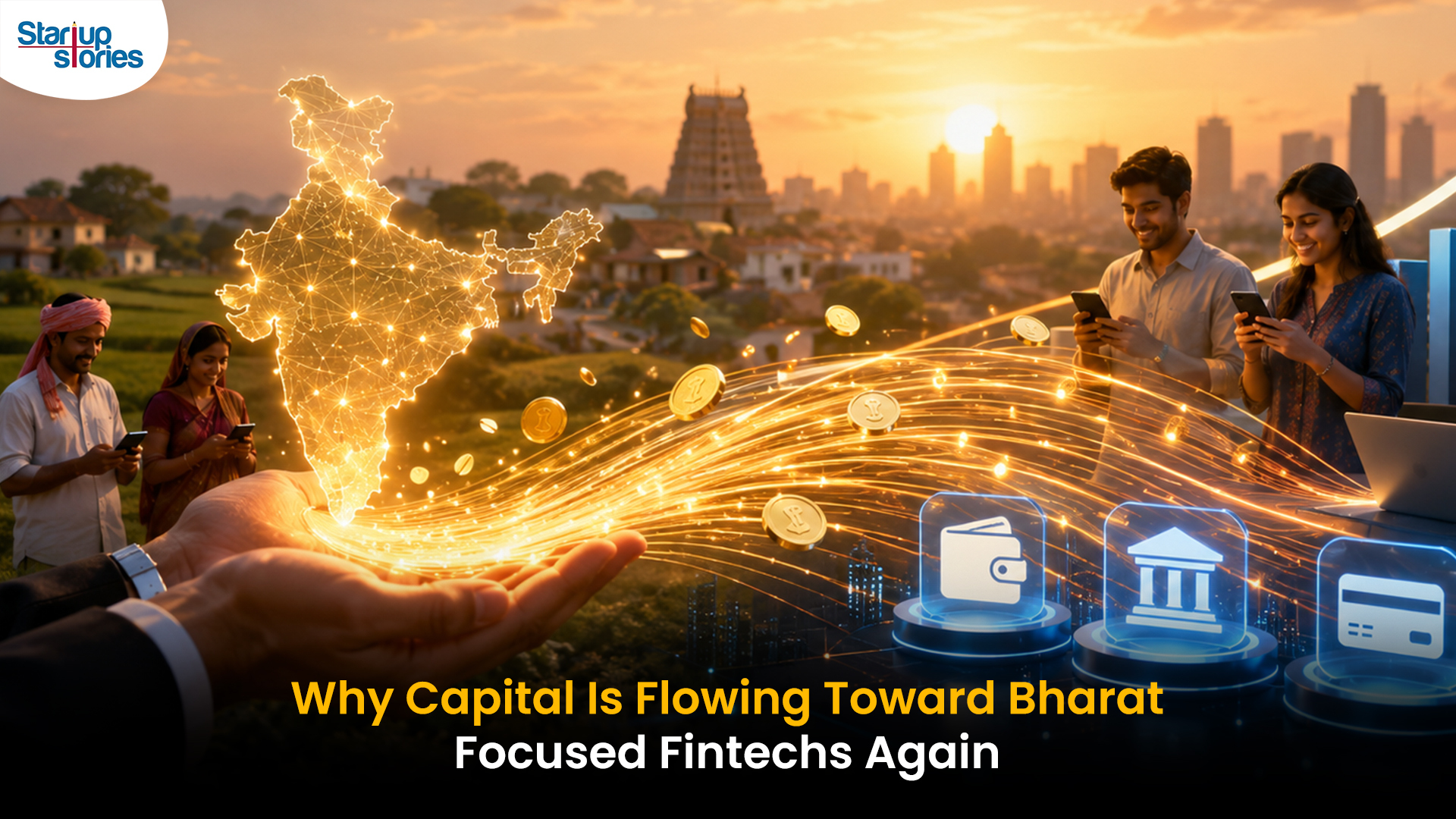
India’s fintech sector is entering a new phase of growth, and the spotlight is increasingly shifting toward underserved consumers in smaller cities and towns. The recent funding secured by WeRize reflects growing investor confidence in platforms that are expanding access to financial products such as credit, insurance, and other services for customers who have traditionally remained outside the reach of formal financial institutions. As digital adoption deepens across the country, fintech companies are finding significant opportunities beyond metro markets.
What makes this trend notable is the industry’s transition from simply enabling digital payments to building broader financial ecosystems. Rather than focusing on a single service, fintech firms are expanding their product portfolios to meet multiple customer needs under one platform. This approach not only strengthens customer relationships but also creates more sustainable business models by increasing engagement and lifetime value.
The larger implication is that India’s next fintech growth story may be driven by financial inclusion rather than convenience alone. Investors are increasingly backing companies that combine technology, data-driven underwriting, and localized distribution to serve emerging consumer segments. As competition intensifies, the ability to build trust, offer relevant products, and address the financial needs of Bharat could become a key differentiator for the next generation of fintech leaders.

OpenAI’s introduction of trusted contact safeguards for potential self-harm cases reflects a major evolution in AI responsibility.
Beyond Moderation
AI safety is shifting from simply blocking harmful content to actively supporting user wellbeing through:
- early risk detection
- human-centered intervention
- stronger emotional safety frameworks
This positions AI as more than an information tool—it becomes part of broader digital support systems.
Key Industry Impact
Trusted contact models could influence future safety standards across:
- AI assistants
- mental health platforms
- social media
- digital health services
The Bigger Challenge
While promising, success depends on balancing:
- privacy
- consent
- ethical intervention
- user trust
Final Take
This move signals that the future of AI safety may rely not just on preventing harmful responses, but on building more responsible, human-connected support systems.

Common Governance Challenges Faced by Nonprofit Organizations in India

How Lenskart Made Indians Comfortable Buying Glasses Online


cloud sneakers for women
April 12, 2026 at 10:34 am
Great job, keep it up!
Salomon hiking water shoes
April 24, 2026 at 2:05 pm
Well explained and easy to follow.
new balance for men's shoes
April 28, 2026 at 12:37 am
Clear, concise, and effective.
Willardteake
May 15, 2026 at 5:19 pm
The CBD aggregation – cbd gummies with thc for pain relief offers a medley of formats that make appropriate exceptional preferences, and each undivided feels well executed. The unguent appears clean and compatible, the packaging materials bear long-lasting, and the fashion is unostentatious till elegant. The products are quiet to inventory and fraternize with, thanks to obvious lids and compact sizing. Entire, the brand delivers a polished and carefully crafted experience without surplus extras.
arderbor elnot
July 14, 2026 at 8:29 am
Thank you for another great article. Where else could anyone get that kind of info in such an ideal way of writing? I have a presentation next week, and I’m on the look for such information.