
Latest News
Google Leverages AI for Over 25% of New Code as Q3 Revenue Hits $88.3 Billion!

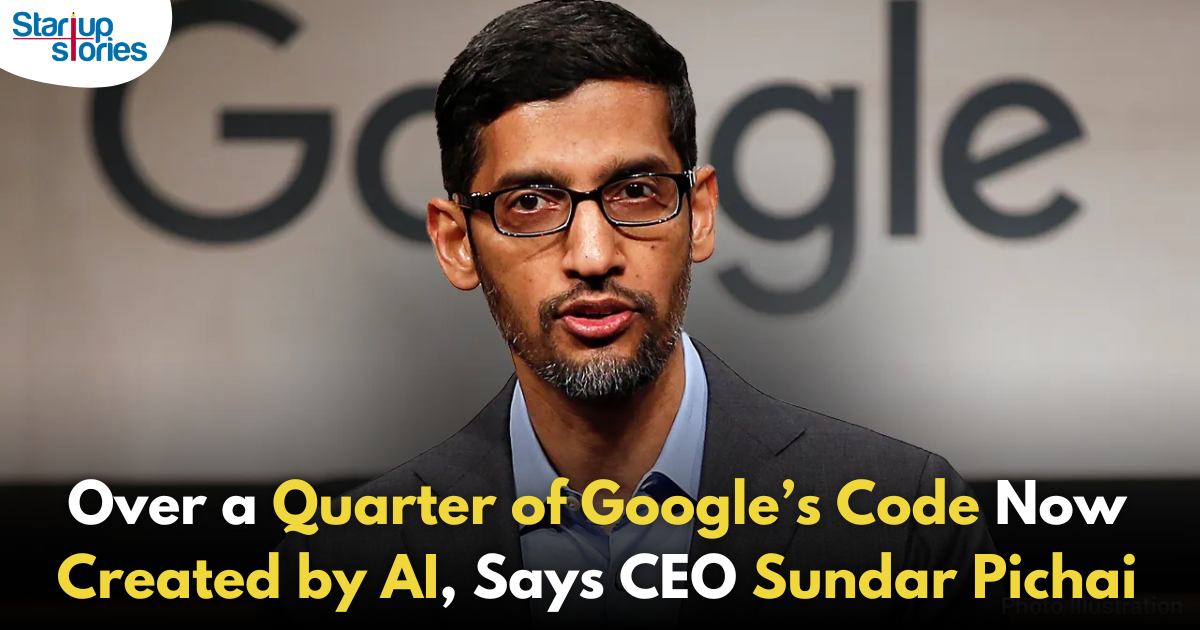
Google’s commitment to artificial intelligence (AI) is reshaping its operational framework, with over 25% of the company’s new software code now generated by AI. This significant shift was highlighted by CEO Sundar Pichai during the recent Q3 2024 earnings call, emphasizing the deepening reliance on AI in Google’s growth strategy. Although engineers rigorously review and approve this AI-generated code, this move marks a pivotal moment in how Google integrates technology into its development processes.
Financial Performance Overview
Alphabet reported impressive financial performance for Q3, with quarterly revenue reaching $88.3 billion. The Google Services segment, which includes its flagship product, Search, generated $76.5 billion, reflecting a 13% increase from the previous year. Meanwhile, Google Cloud achieved substantial gains, bringing in $11.4 billion, marking a remarkable 35% year-over-year growth. Operating income also saw significant growth; Google Services reported $30.9 billion, up from $23.9 billion in the prior year, while Google Cloud’s operating income surged from $270 million to $1.95 billion, underscoring the profitability of Google’s AI-driven services and infrastructure.
AI Advancements in Google’s Offerings
AI advancements have become central to Google’s offerings across various platforms. In Search, new AI capabilities are enhancing both scope and adaptability. Google has introduced “Gems,” an AI-powered chatbot series built on its Gemini model, designed to provide more tailored interactions for users. Additionally, YouTube creators benefit from generative AI tools that assist with video summaries and titles, while Google Meet’s AI note-taking feature automates meeting highlight capture.
The recently launched Pixel 9 series, featuring advanced AI capabilities, has also received positive feedback from consumers and industry experts alike.
Key Enhancements to Code Generation
Google’s integration of AI extends into software development as well. The introduction of tools like Gemini Code Assist allows developers to generate code based on natural language descriptions, helping streamline coding tasks and enhance productivity. This aligns with Google’s broader strategy to leverage AI across its services, making it easier for developers to create and manage applications.
Regulatory Challenges
Despite robust earnings, Google faces increasing regulatory scrutiny and competition. The U.S. Department of Justice has labeled Google a monopoly in the search and advertising sectors, with ongoing legal proceedings entering the remedies phase. Potential outcomes could include a forced breakup of the company, which may have lasting implications for its market position.
Market Dynamics
A recent report from eMarketer indicates that Google’s share of U.S. search ad revenue could fall below 50% next year for the first time in 18 years. Amazon’s share is expected to rise to 24%, while generative AI players continue to attract advertising dollars. In response to these competitive pressures, Google has begun integrating ads into AI-generated summaries at the top of search results—a strategy aimed at maintaining its competitive edge.
Stock Performance and Market Outlook
Alphabet’s stock experienced a nearly 9% drop in the three months leading to September, marking its largest quarterly decline since Q3 of 2022; however, it remains up by 17% for the year. Analysts estimate Alphabet’s overall Q3 revenue growth at 12.6%, reaching approximately $86.31 billion, slightly below the 13.6% growth seen in the prior quarter.
YouTube has also been affected by advertisers shifting budgets toward ad-supported streaming services such as Netflix and Amazon Prime Video. YouTube’s revenue likely grew by 11.5% in Q3, down from a 13% increase in Q2; however, analysts at Truist suggest that YouTube TV may have benefited from increased political ad spending during this quarter.
Bright Spot: Google Cloud
A notable highlight for Alphabet is Google Cloud, which is expected to achieve a remarkable 29.2% growth rate, representing the largest jump in seven quarters as companies increasingly invest in its AI offerings, including the Vertex AI platform that allows customers to leverage Google’s advanced AI models or develop custom solutions.
Strategic Focus on Cost Management
With Ashkenazi’s new role as CFO, there is heightened focus on cost management amidst rising competition and regulatory challenges. Analysts speculate about potential cost-cutting measures beyond Alphabet’s limited layoffs planned for 2024. The financial community will closely monitor Ashkenazi’s strategies to contain rising expenses while sustaining competitive investments in AI.
Conclusion
As Alphabet prepares for its quarterly earnings report, the anticipated slowdown in revenue growth highlights challenges posed by increasing competition and regulatory pressures. While Google Cloud shows promising growth driven by AI demand, Alphabet must navigate these pressures carefully to maintain its leadership position in digital advertising and cloud computing.
The evolving landscape will require innovative strategies and continued investment in technology to ensure long-term success amidst a rapidly changing market environment. With over 25% of new code being generated by AI, Google is not only adapting but also setting a precedent for how technology can enhance operational efficiency across various sectors of its business.








The healthy snacking category in India is no longer a niche trend it is steadily becoming a mainstream consumer movement. The latest funding momentum around brands like Phab highlights how investors are increasingly backing companies that sit at the intersection of health, convenience, and modern lifestyles. As urban consumers become more conscious of ingredients, nutrition, and long-term wellness, demand is shifting away from traditional packaged snacks toward products that promise both taste and better nutritional value.
What makes this market particularly attractive is its ability to create recurring consumer habits. Unlike many direct-to-consumer categories that rely heavily on one-time purchases, healthy snacks naturally fit into daily routines. This opens opportunities for brands to build stronger customer loyalty while expanding into adjacent categories such as protein-rich foods, functional beverages, and wellness-focused products. The competition is no longer about selling snacks it is about owning a larger share of the consumer’s health journey.
Looking ahead, the biggest winners may not be the brands with the widest product portfolios, but those that can balance nutrition, affordability, and taste at scale. As health-conscious consumption expands beyond metro cities, India’s better-for-you food segment could evolve into one of the country’s most significant consumer categories. The growing flow of capital into this space signals that investors are betting on a long-term behavioral shift rather than a short-lived food trend.

India’s fintech sector is entering a new phase of growth, and the spotlight is increasingly shifting toward underserved consumers in smaller cities and towns. The recent funding secured by WeRize reflects growing investor confidence in platforms that are expanding access to financial products such as credit, insurance, and other services for customers who have traditionally remained outside the reach of formal financial institutions. As digital adoption deepens across the country, fintech companies are finding significant opportunities beyond metro markets.
What makes this trend notable is the industry’s transition from simply enabling digital payments to building broader financial ecosystems. Rather than focusing on a single service, fintech firms are expanding their product portfolios to meet multiple customer needs under one platform. This approach not only strengthens customer relationships but also creates more sustainable business models by increasing engagement and lifetime value.
The larger implication is that India’s next fintech growth story may be driven by financial inclusion rather than convenience alone. Investors are increasingly backing companies that combine technology, data-driven underwriting, and localized distribution to serve emerging consumer segments. As competition intensifies, the ability to build trust, offer relevant products, and address the financial needs of Bharat could become a key differentiator for the next generation of fintech leaders.

OpenAI’s introduction of trusted contact safeguards for potential self-harm cases reflects a major evolution in AI responsibility.
Beyond Moderation
AI safety is shifting from simply blocking harmful content to actively supporting user wellbeing through:
- early risk detection
- human-centered intervention
- stronger emotional safety frameworks
This positions AI as more than an information tool—it becomes part of broader digital support systems.
Key Industry Impact
Trusted contact models could influence future safety standards across:
- AI assistants
- mental health platforms
- social media
- digital health services
The Bigger Challenge
While promising, success depends on balancing:
- privacy
- consent
- ethical intervention
- user trust
Final Take
This move signals that the future of AI safety may rely not just on preventing harmful responses, but on building more responsible, human-connected support systems.

Common Governance Challenges Faced by Nonprofit Organizations in India

How Lenskart Made Indians Comfortable Buying Glasses Online


