
Entrepreneur Stories
The Year 2017 Through The Eyes Of Elon Musk

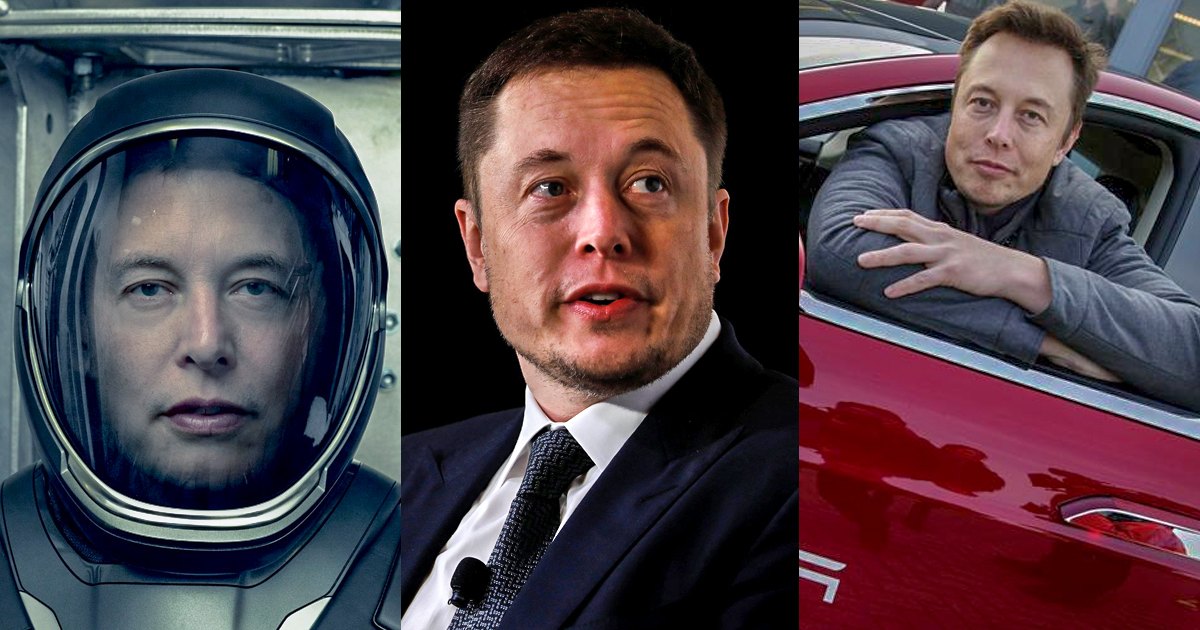
The year 2017 was an eventful one for technology, creation and entrepreneurship. While creators broke the world with their innovative ideas and innovations, one inventor had an immensely successful year. The last year can easily be termed as the year of Elon Musk. Love him or hate him, you cannot help but be amazed by the number of stupendous things achieved by this genius.
From SpaceX to the Boring Company to Tesla and Neuralink, Elon Musk has revolutionised the way we think about and approach the very concept of space travel, transportation and the way we work. With just a month into the New Year, it seems only fair to take a moment to look at the great things Elon Musk has done in the last year!
1. January 4
Four days into 2017, Elon Musk announced that he had begun the mass production of batteries at its Gigacenter. The lithium ion cells are for use in its Powerpack and Powerwall home batteries.
Hold-down firing of @SpaceX Falcon 9 at Vandenberg Air Force completed. All systems are go for launch next week.
— Elon Musk (@elonmusk) January 5, 2017
2. January 23
Musk meets President Trump at the White House along with Michael Dell and the Under Armour founder, Kevin Plank. This signalled the beginning of a very important discussion that started off a massive economic relationship between the American President and Elon Musk. Also, a lot of serious discussions began on testing Hyperloop, for the advanced transportation of technology.
Teams arrive today for Testing Week before first-ever Hyperloop Competition at @SpaceX HQ on Jan. 27-29 → https://t.co/MHrFCAOGoH #breakapod pic.twitter.com/lCrFFDti0a
— Hyperloop (@Hyperloop) January 22, 2017
3. February 1
Months after Musk’s company voted to buy SolarCity, the company officially announced its decision to change the name from Tesla Motors to just Tesla, signalling the fact that the company is going to focus on cars.
4. February 27
Musk announces that SpaceX plans to fly two private citizens around the moon sometime in 2018. NASA also collaborated this information by saying that with this relationship, it would signal the beginning of a union between government based and private aerospace organisations.
5. April 4
Tesla’s market capital rises to over 300, making it the most valuable company. With this, Tesla even surged past GM and Ford!
6. April 10
Through Tesla, Musk created a brand new set of solar panels that weigh considerably lesser than the already existing ones. Also, the mounting for these panels wasn’t visible to the naked eye.
7. April 21
Neuralink took the world by storm as it brought to the forefront the concept of brain computer interfaces. Musk’s work towards this “cyborg” goal became actualized this year
It’s finally here: the full story on Neuralink. I knew the future would be nuts but this is a whole other level. https://t.co/4I44hFJzFC pic.twitter.com/YVA6dLH8uY
— Tim Urban (@waitbutwhy) April 20, 2017
7. April 28
Musk officially launches the Boring Company and presents the possibilities of using the tunnels in conjunction with another one of his transportation ideas, the high-speed hyperloop rail.
8. May 3
Tesla delivered a record number of 25,o00 cars and displayed a total revenue of $ 2.7 billion, a first for the company since its partnership with SolarCity. Incidentally, this was also double the amount of revenue recorded by Tesla from the last year till now.
9. June 1
Musk pulls out of Trump’s advisory council after Trump pulls out of the Paris Accord, a pact which includes every country in the world and works towards reducing the impact of climate change.
Am departing presidential councils. Climate change is real. Leaving Paris is not good for America or the world.
— Elon Musk (@elonmusk) June 1, 2017
10. June 28
Musk announces that he has started digging a tunnel under Los Angles using the boring machine created by the Boring Company. This was completed in October!
Picture of The Boring Company LA tunnel taken yesterday pic.twitter.com/TfdVKyXFsJ
— Elon Musk (@elonmusk) October 28, 2017
11. July 9
The first 3 models of Tesla rolls off!
12. August 4
Contrary to the initial plan set by Musk himself in 2013, he starts construction work on the hyperloop himself!
13. September 29
Musk announces his intention to launch not one, but two spacecrafts on Mars using SpaceX rockets!
BFR is capable of transporting satellites to orbit, crew and cargo to the @Space_Station and completing missions to the Moon and Mars. pic.twitter.com/p9staho4VZ
— SpaceX (@SpaceX) September 29, 2017
14. October 24
Tesla jumps in to save Peurto Rico and other Caribbean islands after Hurricane Maria by sending in Powerpanks and Solar Panels to the islands as well as by discussing plans to restore its grid.
Hospital del Niño is first of many solar+storage projects going live. Grateful to support the recovery of Puerto Rico with @ricardorossello pic.twitter.com/JfAu11UBYg
— Tesla (@Tesla) October 24, 2017
15. November 16
Through Tesla, Musk announces Semi, a battery powered tractor trailer that can travel 500 miles on a single charge. The production for this tractor will begin in 2019!
Clearly the past year has been quite an exciting and interesting one for Elon Musk and we can only wait and watch to see what this brilliant revolutionalist will come up with for this year!


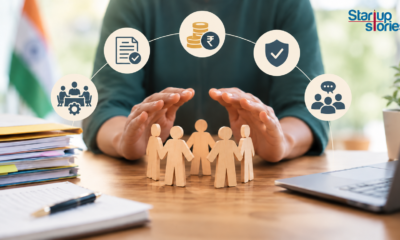



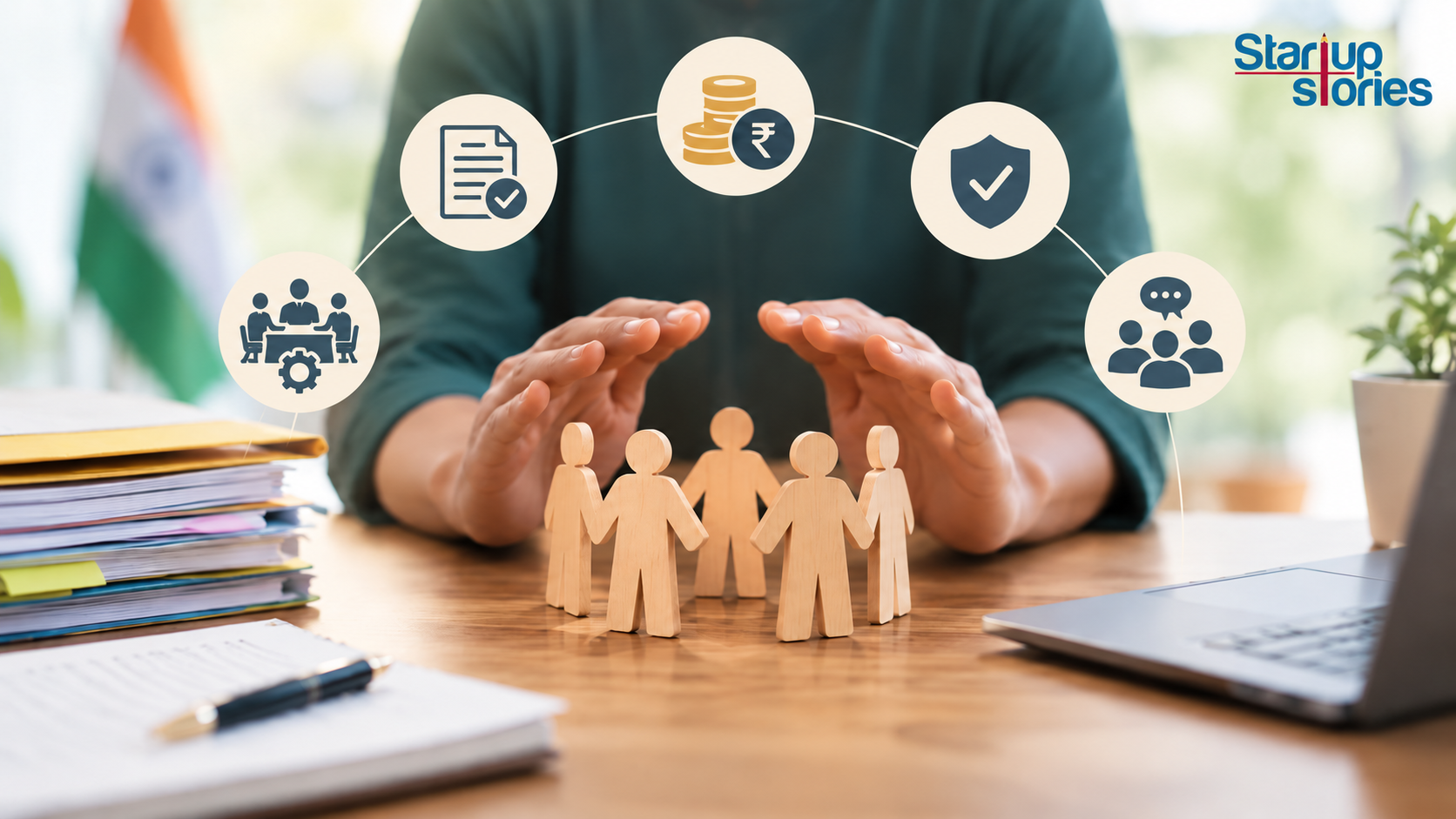
While there has been continuous growth in the Indian non-profit sector, many organizations have fallen behind on governance. A founder who completes Section 8 registration obtains a legal entity, a board, and a defined mission. However, operating that organization in a manner that will meet the expectations of the regulators, banks, and donors is the difficult part.
Government statistics tell the story of these regulatory lapses. According to the government data, there were 21,983 cancellations of NGOs over the last year, with 91.3% of the cancellations being due to failure to file annual returns. Active FCRA-registered NGOs also fell from 29,022 in 2015 to 14,466 as of September 2026.
Late Filings are the Main Reason NGO Registrations Get Cancelled
The cancellation statistics show that organizations mostly lose their registration because of the failure to file on time, and not because of anything of grave concern. Other legal violations resulted in only 0.4% of cancellations, and the rest are attributed solely to lapsed filings.
This is because small and volunteer groups often don’t have an accountant on staff, and no one is dedicated to checking for due dates. Therefore, a late return becomes a lost license a few cycles later.
Why Board Oversight Often Falls Short in Small Nonprofits?
While directors, minutes, and regular meetings are necessary for a Section 8 company, in practice many boards consist of the founder and two relatives or colleagues who sign anything placed before them. Informal decisions are made, and minutes are written afterwards to match. This continues until the bank, an auditor, or a CSR partner requests proof of expense approval.
If the board, no matter what its legal structure is, is unable to keep any log of its own decisions, it has a governance gap.
Section 8 Company Compliances That Often Get Missed
The statutory calendar is not long, but it carries strict deadlines. Section 8 company compliances include:
- At least one board meeting every six months, with minutes kept
- Annual AGM without exception
- A first-year statutory audit report
- Annual filings with the ROC and director KYC
- Income tax return in ITR-7 along with separate FCRA returns if foreign funds are received
Failure to take all of these into consideration results in penalties. In fact, for organizations holding an FCRA registration, failure to file the required returns can lead to suspension or cancellation of that registration under Section 13 of the FCRA, 2010.
What CSR Funders Expect from Nonprofit Financial Records?
Data from the MCA shows that CSR spend increased by 17% to reach a record ₹40,794 crore in FY 2024-25. This means that more corporate money is available to nonprofits than before. Usually, the corporate funders require a Darpan ID, Form CSR-1 filing, 12A and 80G registrations, and utilization certificates to grant capital.
When nonprofits combine project funds with general funds or cannot demonstrate that funds are being spent on a specific project, they generally fail to reap the benefits of this even if their programme work is good.
Why New FCRA Rules Add Pressure on Nonprofits?
The rules are also changing. On 22nd June, 2026, the government implemented changes in the Foreign Contribution (Regulation) Rules, introducing new compliance requirements for organizations receiving foreign funds. The proposed Foreign Contribution (Regulation) Amendment Bill, 2026, which was tabled in Parliament during the Monsoon Session, suggests the establishment of a Designated Authority that would assume foreign donations and assets created with foreign funds upon the termination of the registration. Organizations with poor records and no documented processes are the most susceptible to changes such as these.
Practical Steps Toward Stronger Nonprofit Governance
A compliance calendar that is owned by a named person, a board that meets and records minutes, an advance appointment of an auditor, and funding from more than one source mitigate most of the risks listed above. Registration creates the structure, but governance is what makes or breaks the organization’s ability to remain alive in five years.
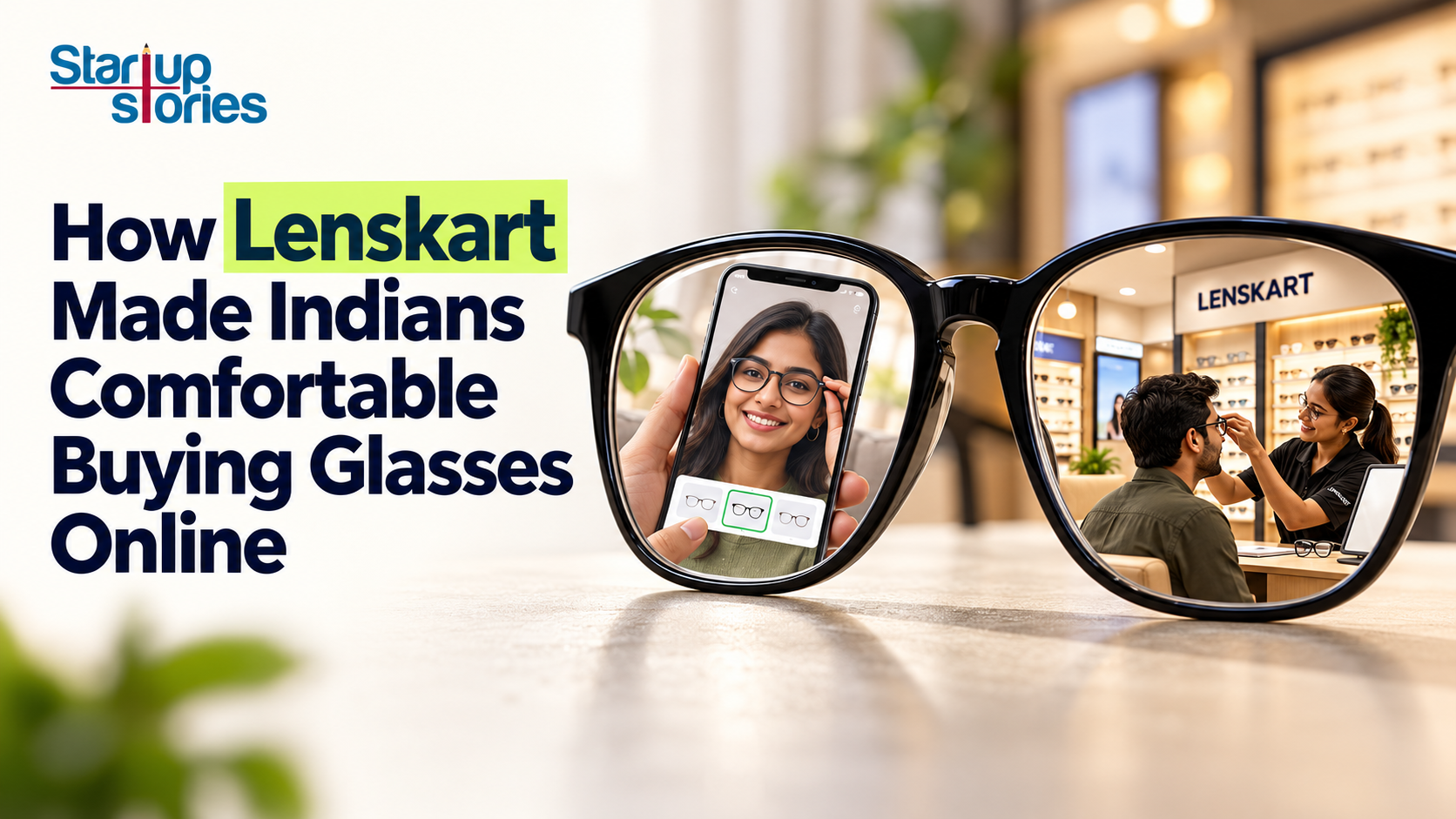
In the past, purchasing eyewear in India was a highly regional activity. You entered a local optical store, selected a frame from a dusty wall, waited for someone to verify your power, and hoped the total cost wouldn’t be too exorbitant. There was little choice, little transparency, and little any justification for considering eyewear to be anything other than a medical necessity.That was altered by Lenskart.
Peyush Bansal, Amit Chaudhary, and Sumeet Kapahi founded Lenskart in 2010 in response to a question that many people disregarded: why was purchasing glasses still so difficult? Glasses are a personal item. People are concerned about the price, the quality of the lenses, and how the frames will seem on their faces. Because of this, selling eyewear online became challenging. In response, Lenskart did not make consumers pick between online and offline buying. It blended the two.
Before making a choice, customers may now browse frames online thanks to the company’s introduction of facilities like virtual try-on, home eye tests, and home trials. However, it also established physical locations where clients could obtain eye exams, try on frames, and get assistance from qualified personnel. This “online plus offline” strategy turned out to be one of its main advantages.
The more unexpected action took place in the background. Lenskart did not wish to rely just on local optical stores, importers, and overseas manufacturers. It started to have more control over the chain itself, including designing frames, manufacturing lenses, operating stores, and overseeing delivery. Lenskart benefited from what is known as vertical integration in three ways. First, by eliminating middlemen, it could maintain lower prices. Secondly, it might have closer control over quality. Third, as a frame style gained popularity, it could respond more quickly.In Bhiwadi, Rajasthan, Lenskart currently runs a sizable automated production facility capable of producing up to 50 million pairs of glasses a year. The company made 4 million lenses and 6.4 million frames internally in India in FY25.
In India, its expansion continued. Lenskart paid over $400 million to acquire the bulk of the Japanese eyewear company Owndays in 2022. Through the acquisition, Lenskart gained access to a number of Asian markets and gained knowledge from a more developed retail environment. Lenskart recorded operational revenue of ₹6,653 crore by FY25, a 22.6% increase over the previous year. However, Lenskart’s revenue isn’t what makes it intriguing. Glasses, a product that consumers often only purchase when they have a problem, were transformed into an inexpensive, technology-driven, design-driven shopping experience.
Due of its online frame sales, Lenskart lost. It prevailed because it eliminated the anxiety associated with purchasing eyewear online and then constructed stores for the times when clients still required human assistance.
The conclusion is straightforward: consumers don’t give a damn if a company operates online or offline. Convenience, assurance, and value are important to them. Businesses that integrate all three typically succeed.

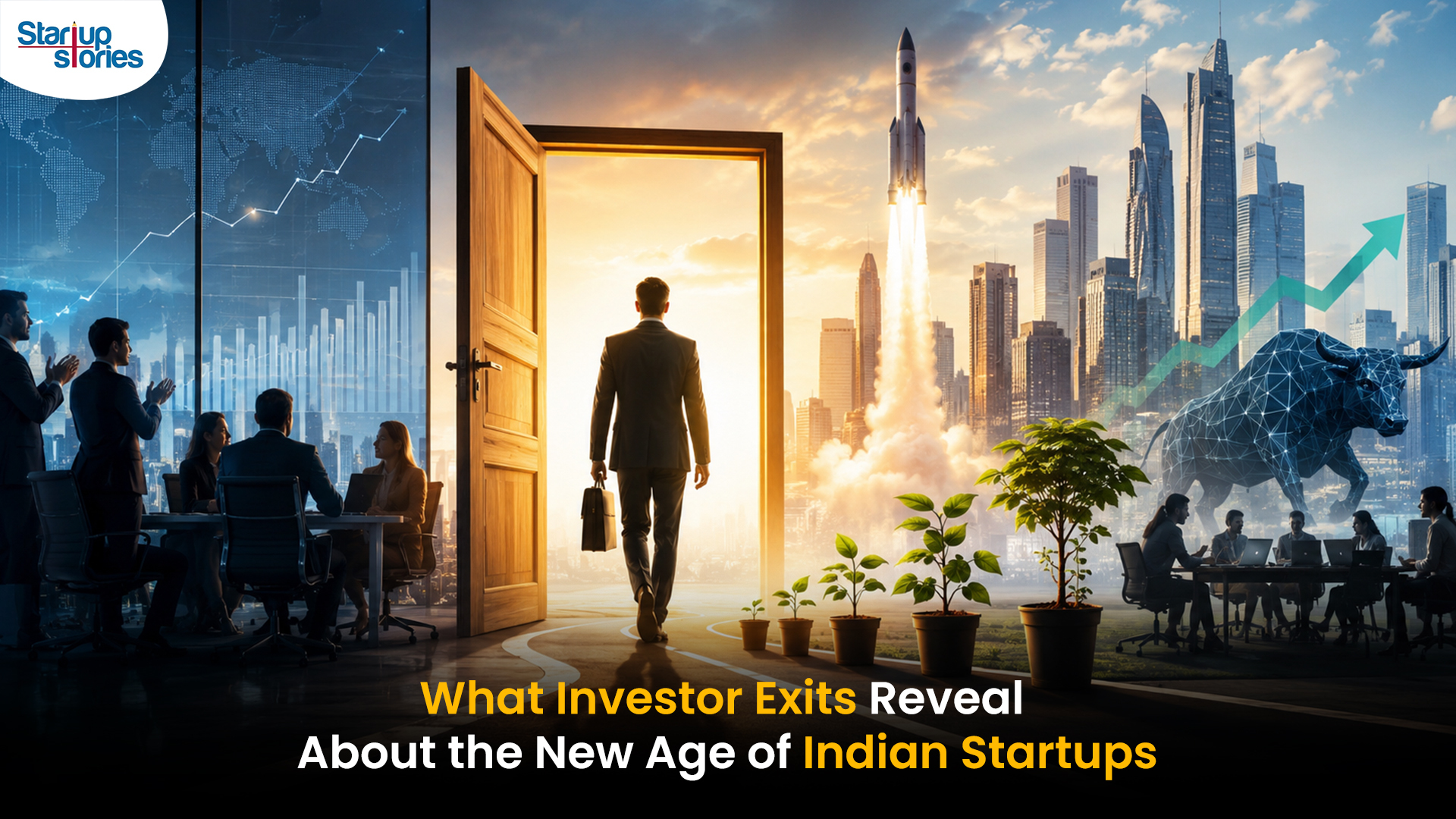
A decade ago, the success of a startup was measured largely by its ability to raise capital. Today, a different metric is gaining importance: the ability to generate meaningful exits for investors. Large stake sales by early backers are becoming increasingly common, not because growth opportunities have disappeared, but because India’s startup ecosystem is entering a more mature phase where capital is expected to complete its full cycle from investment to returns.
This evolution is particularly significant for consumer brands that have successfully blended technology, retail, and strong brand-building. Companies that were once viewed as high-risk startup bets are now attracting institutional investors capable of absorbing large transactions. Such developments indicate that these businesses are no longer being valued solely on future potential; they are increasingly being assessed on operational performance, market leadership, and long-term profitability. In many ways, investor exits are becoming a validation of a company’s ability to create lasting enterprise value.
The broader implication extends beyond a single company or investor. Successful exits encourage more global capital to enter India’s startup ecosystem because they demonstrate that liquidity opportunities exist at scale. As more venture-backed companies approach public listings, secondary transactions, or strategic investments, the focus of founders and investors alike may shift from chasing headline valuations to building durable businesses. The next chapter of India’s startup journey will likely be defined not just by the creation of unicorns, but by the creation of companies capable of delivering sustained returns to all stakeholders.

Common Governance Challenges Faced by Nonprofit Organizations in India

How Lenskart Made Indians Comfortable Buying Glasses Online


