
Entrepreneur Stories
The Nokia Story

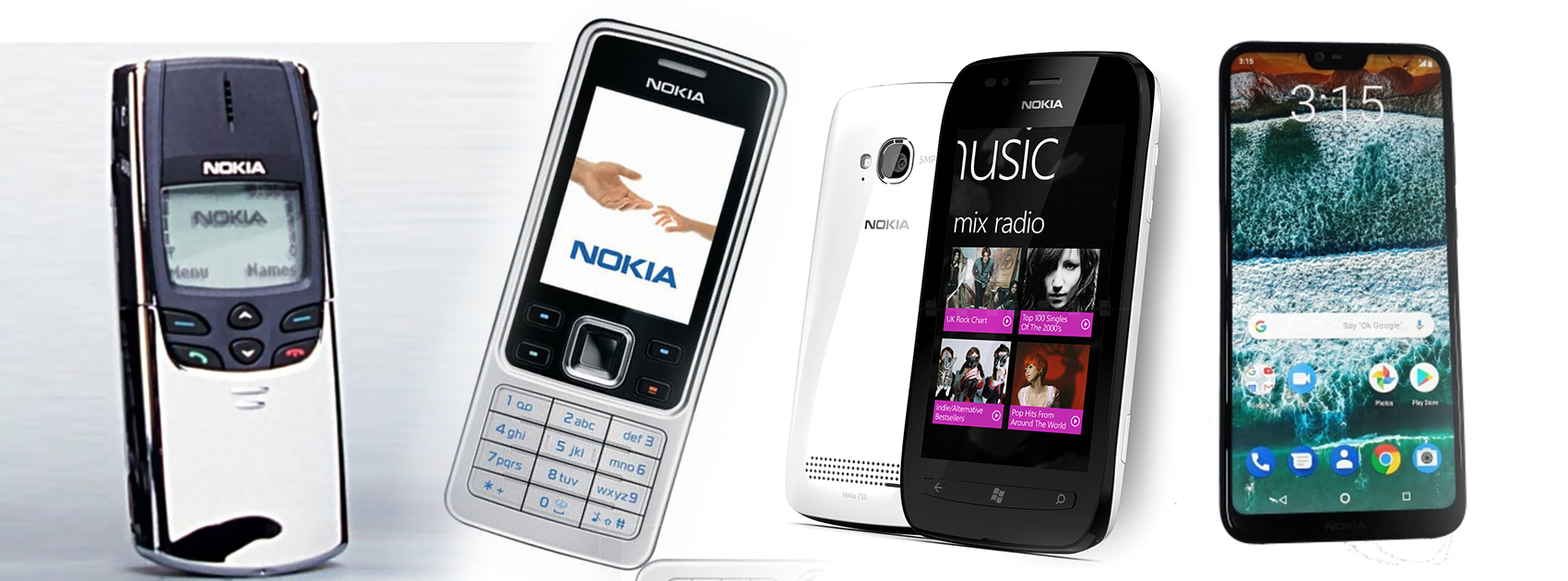
Nokia, a mobile manufacturing company with a Finnish origin, was at the top of its game. Their phones were affordable, made for people of all age groups and were easy to use. With so much going for them, it came as a major shocker to see the Company failing so miserably, Here’s taking a look at the rise and fall of Nokia, a company which started off not as an electronics and telecommunications company, but as a paper mill!
The beginning of Nokia
The beginning of Nokia can be traced back to the year 1865. Back then, this Finnish company was into paper making. The first paper mill was a massive success and by 1960, the Company branched out to electronics. From developing a special radio phone for the Army to creating a new range of electronics, Nokia grew steadily and quickly. Over the next few years, the Company kept adapting to change and by the dawn of the 20th century, Nokia started moving away from the pulp industry and created the first ever car phone! Nokia’s foray into the world of mobile phones started when Jorma Nieminen, fondly known as the Father of the Finnish Mobile Industry, decided to change the course of the company.
Jorma created the need of carrying phones outside their house, a thing which wasn’t considered feasible till the idea was presented. The first phone was manufactured at the meager cost of a 100 pounds and over the years, the Company kept adapting to a point where people slowly got convinced they needed a new version every few years.
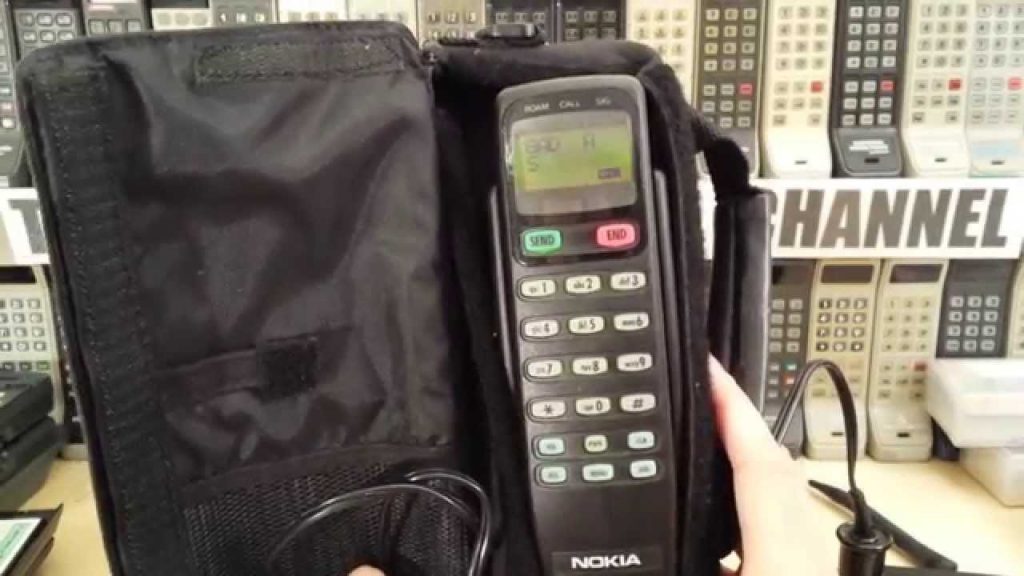
Picture credits: nokiemesuem.info
The growth of Nokia in the world of phones
By the year 1979, Nokia entered a joint partnership with Salora (a leading Scandinavian colour TV manufacturer) to create a radio telephone company called Mobira Oy. Together with Salora, Nokia launched the first ever international cellular system called the Nordic Mobile Telephone network. Creating a link between Sweden, Denmark, Norway, and Finland, this network enabled international conversations and increased communication between people.
Through the years, Nokia acquired not only Salora, but other companies as well, giving the manufacturing company the edge it needed to push toward something bigger and better. The first ever mobile handset by Nokia, called Mobira Cityman 900, was brought to life in the early 1990s. Despite weighing over 800 grams and costing close to $ 5,456, this mobile phone sold like crazy!
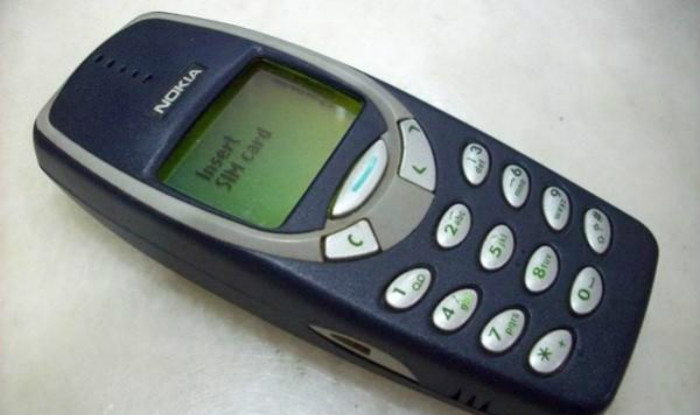
Picture credits: carphonewarehouse.com
The change in Nokia’s strategy
Despite the massive success of the first handheld phone by Nokia, the company saw a lull in its profits. By the 1990s, the Nokia team realised the time had come to change the course of their plan by creating phones which blended with the times. In 1992, the first GSM Nokia phone, called Nokia 1011, was launched and immediately, the Company realised they had made it to the big leagues!
While the 1990s saw the rise of a new series of phones (the most popular one being the Nokia 6100,) the initially years of the next decade saw Nokia branch out into a new world. Making the most of the wireless technology boom at the time, Nokia won people all over the world by promising them an amazing experience. Perhaps the phone which propelled Nokia to the top was the Nokia 7650. Released in the year 2001, this was the first ever phone in the world with a built in camera!
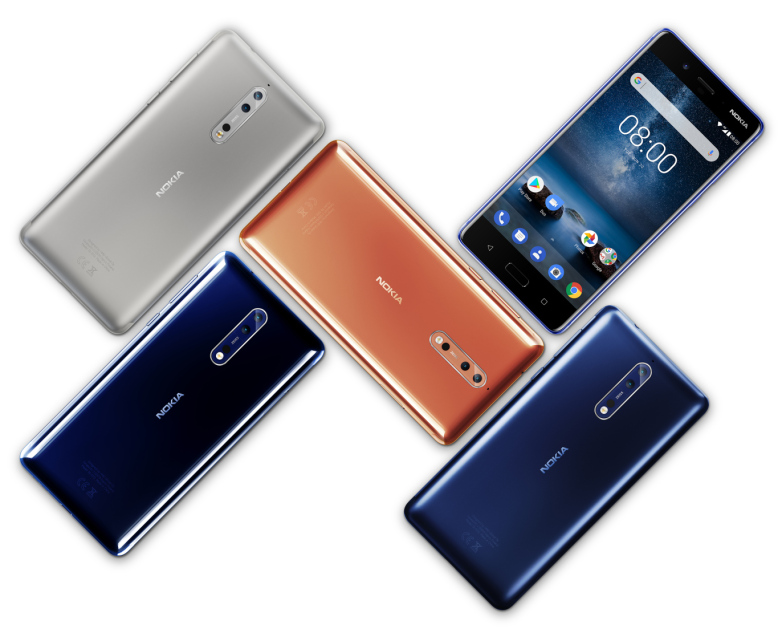
Picture credits: Nokia.com
The gradual decline from fame
Within the first few years, Nokia’s profits started sky rocketing and the company kept expanding its services to a whole new place. At its heart, Nokia was always a hardware company and despite all its efforts to stay ahead of the game, it didn’t realise the growing effect the touchscreen phenomenon was having on the rest of the world! To add to the bag of ever growing troubles, faulty batteries made Nokia recall an entire shipment of phones, a move which resulted in a 30 % dip in sales!
Although the 90’s were Nokia’s rise to fame, the year 2007 saw a steep decline in Nokia’s profits. In 2009, the Company posted its first ever quarterly losses. With other companies like Apple and HTC upping their game in the face of competition, Nokia wasn’t sticking to the trends which were being followed by other people at the time.
By 2011, Nokia was struggling to make its presence felt in a market being taken over by other big wigs. The first partnership between Nokia and Microsoft saw the team give the world the Lumia series, a feeble attempt of overpowering the Android and the iOS trend. However, the Lumia series failed take make a mark.
With no other way out, Nokia decided the time had come to sell. In the year 2013, the hardware department of Nokia was acquired by Microsoft, a move which did not help Nokia regain its foothold in the market. Soon, Nokia faded into the background. However, post a very public take over by HMD Global, the Company is all set to make a grand come back in the world of smartphones!









A decade ago, the success of a startup was measured largely by its ability to raise capital. Today, a different metric is gaining importance: the ability to generate meaningful exits for investors. Large stake sales by early backers are becoming increasingly common, not because growth opportunities have disappeared, but because India’s startup ecosystem is entering a more mature phase where capital is expected to complete its full cycle from investment to returns.
This evolution is particularly significant for consumer brands that have successfully blended technology, retail, and strong brand-building. Companies that were once viewed as high-risk startup bets are now attracting institutional investors capable of absorbing large transactions. Such developments indicate that these businesses are no longer being valued solely on future potential; they are increasingly being assessed on operational performance, market leadership, and long-term profitability. In many ways, investor exits are becoming a validation of a company’s ability to create lasting enterprise value.
The broader implication extends beyond a single company or investor. Successful exits encourage more global capital to enter India’s startup ecosystem because they demonstrate that liquidity opportunities exist at scale. As more venture-backed companies approach public listings, secondary transactions, or strategic investments, the focus of founders and investors alike may shift from chasing headline valuations to building durable businesses. The next chapter of India’s startup journey will likely be defined not just by the creation of unicorns, but by the creation of companies capable of delivering sustained returns to all stakeholders.
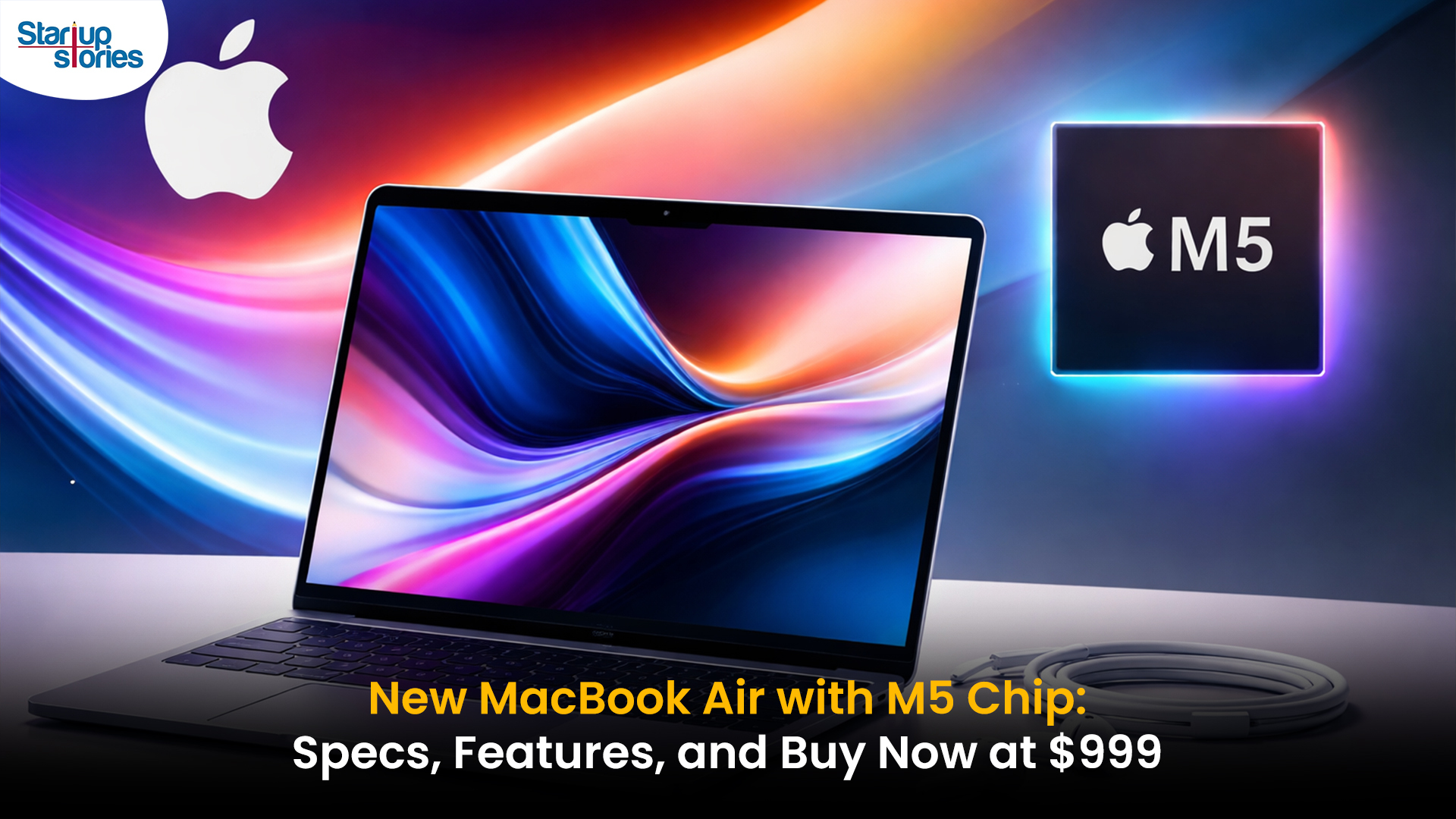
Apple has unveiled the new MacBook Air with M5 chip, starting at $999 for 13-inch and $1,299 for 15-inch models. The MacBook Air M5 boasts a 2nm M5 chip with 12-core CPU, 18-core GPU, and 50 TOPS Neural Engine for seamless AI tasks like real-time translation and 8K editing. Up to 22 hours of battery life, Thunderbolt 5, and Wi-Fi 7 make it the ultimate ultraportable, now 10% thinner at 0.44 inches with fanless cooling.
Key MacBook Air M5 features include Liquid Retina XDR display (500 nits, nano-texture option), 12MP Center Stage camera, and six-speaker Spatial Audio. Colors like new Sky Blue join Midnight and Starlight. Pre-orders are live today, with macOS Sequoia 15.4 enhancing Apple Intelligence and iPhone Continuity for students, pros, and remote workers.
Why buy MacBook Air M5 now? It outpaces Snapdragon X Elite rivals with ecosystem magic and future-proof performance, eyeing top 2026 laptop sales. CEO Tim Cook calls it “more capable than ever.” Visit apple.com for M5 MacBook deals and specs.

Delhi NCR-based gaming startup Zupee has acquired Mumbai-based microdrama platform Vertical TV in a deal valued under INR 40 Cr. This move strengthens Zupee Studio, its short-video arm launched in September 2025, by integrating Vertical TV’s expertise in bite-sized dramas like romance and thrillers.
Facing challenges from India’s 2025 real-money gaming ban, Zupee valued at $1 Bn after raising $120 Mn has pivoted to non-gaming content, including recent layoffs of 40% of its workforce. The acquisition builds on its November 2025 purchase of Australian AI firm Nucanon for interactive storytelling, targeting its 200 Mn+ users with engaging, mobile-first formats.
This deal underscores the rising microdrama trend in India, helping Zupee diversify amid regulatory pressures and compete in the short-video space dominated by quick, shareable content for on-the-go audiences.


