
Tech
Nvidia Surpasses Expectations with Soaring Profits Amid AI Chip Demand!

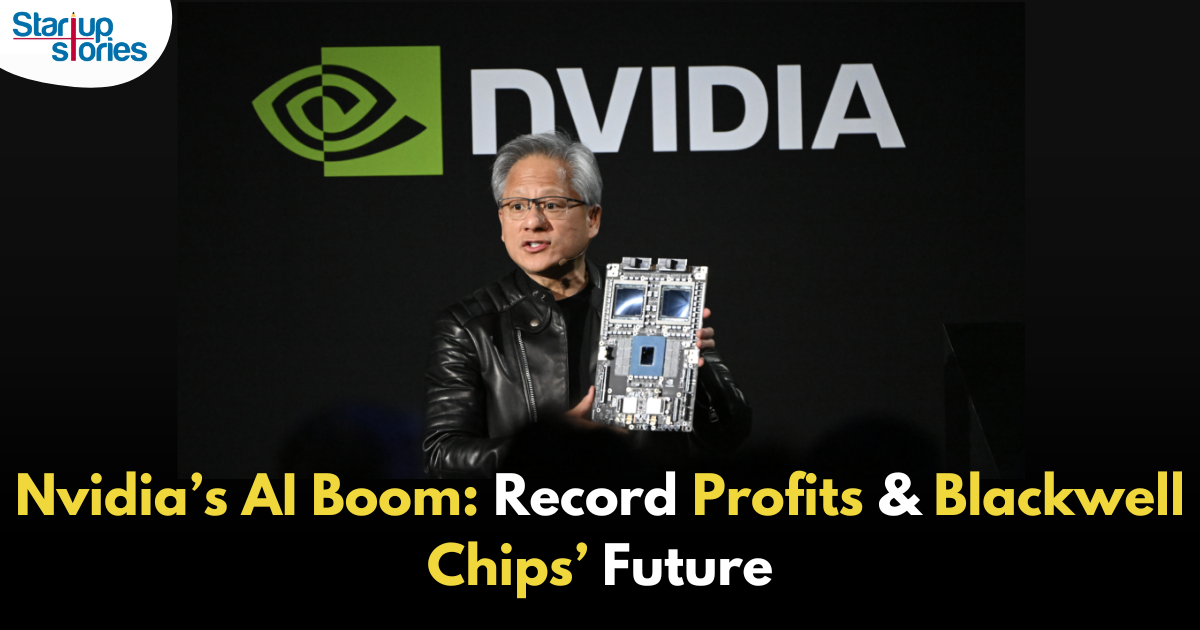
Nvidia reported a remarkable surge in third-quarter profits and revenue, fueled by robust demand for its advanced chips that power artificial intelligence (AI) systems. The tech giant, headquartered in Santa Clara, California, saw its revenue for the quarter ending October 27 climb to $35.08 billion, marking a 94% increase from $18.12 billion in the same period last year.
Financial Highlights
- Net Earnings: Nvidia’s net earnings more than doubled to $19.31 billion, up from $9.24 billion a year ago.
- Earnings Per Share (EPS): On an adjusted basis, Nvidia posted earnings of 81 cents per share, exceeding Wall Street’s expectations of 75 cents per share on projected revenues of $33.17 billion, according to FactSet.
- Stock Performance: Despite the stellar performance, Nvidia’s stock slipped 1% in after-hours trading. However, shares remain up 195% year-to-date, cementing its position as one of the stock market’s most valuable companies.
AI-Driven Growth
Nvidia’s CEO, Jensen Huang, emphasized the company’s pivotal role in the AI revolution, stating, “The age of AI is in full steam, propelling a global shift to Nvidia computing.”
Key Revenue Drivers
- Data Center Revenue: The company’s data center revenue soared to $30.8 billion, a 112% increase from last year. This growth was driven by demand for the Hopper platform, which is utilized in generative AI applications, recommendation systems, and large language models.
- Gaming Revenue: While AI remains Nvidia’s primary growth driver, its gaming revenue also saw a 15% year-over-year increase, reaching $3.3 billion.
Supply Constraints for Blackwell
Production shipments of Nvidia’s next-generation AI chip, Blackwell, are slated to begin in the fourth quarter of fiscal 2025 and will ramp up into fiscal 2026. However, supply constraints for both Hopper GPUs and Blackwell systems are expected to persist, with demand for Blackwell anticipated to outstrip supply for several quarters.
“Every customer is racing to be the first to market,” said Colette Kress, Nvidia’s CFO, adding that Blackwell systems are already being integrated into major data centers.
Huang confirmed that Nvidia will deliver more Blackwells this quarter than initially estimated, underscoring the strong demand for its cutting-edge technology.
Mixed Market Reaction
Despite the robust results, Nvidia’s fourth-quarter guidance of $37.5 billion, plus or minus 2%, fell slightly short of analysts’ average expectation of $37.09 billion. David Volpe, senior fund manager at Emerald Insights Fund, described the guidance as “a little bit disappointing” but emphasized that the company still had an “outstanding quarter.”
The Emerging AI Revolution
The demand for generative AI tools—such as those capable of creating images or generating text—has significantly boosted Nvidia’s prominence in the AI space. Analysts like Dan Ives of Wedbush Securities believe that the AI boom is just beginning.
“We view this as an Nvidia earnings report that belongs in the Louvre,” Ives remarked, predicting that Nvidia’s market cap could reach $4 trillion by 2025 as it continues to dominate the AI sector.
Historical Context and Future Outlook
Nvidia has a storied history of innovation; its introduction of graphics processing units (GPUs) in 1999 revolutionized PC gaming and computer graphics. As it stands at the forefront of AI technology today, Nvidia is poised not only to capitalize on current demand but also to shape the future landscape of computing.
As Huang continues to lead Nvidia’s charge as the “Godfather of AI,” analysts and investors alike are betting on the company’s ability to sustain its extraordinary growth trajectory amid evolving technological demands and competitive pressures.
Conclusion
Nvidia’s impressive financial performance underscores its pivotal role in powering AI advancements across industries. With strong demand for its specialized chips and ongoing innovations like the Blackwell architecture, Nvidia is well-positioned for continued success in an increasingly AI-driven world. As it navigates supply challenges and market expectations, all eyes will be on how effectively it can leverage its technological leadership to maintain momentum in this rapidly evolving sector.









Paytm parent One 97 Communications has granted fresh employee stock options (ESOPs) worth about ₹16.7 crore to eligible staff under its 2019 ESOP scheme, highlighting a stronger push toward employee ownership and retention. The grant covers 1,23,908 options, each convertible into one equity share with an exercise price of ₹9, significantly below the prevailing market price. At Paytm’s recent share price levels, this translates into a notional value of around ₹16.6–16.7 crore for employees.
The ESOPs are designed to align employee incentives with Paytm’s long-term growth, giving high-performing team members a direct stake in future value creation. As the options vest and are exercised, eligible employees can participate in potential upside from Paytm’s expanding fintech and payments ecosystem, subject to standard ESOP vesting conditions. The company has also confirmed that the scheme complies with SEBI’s share-based benefit regulations.
This ESOP grant comes soon after Paytm’s payments arm secured key RBI approvals to operate as a payment aggregator across online, offline and cross-border transactions, strengthening its regulated payments stack. Coupled with rising operating revenues, the fresh stock options signal management’s continued focus on attracting and retaining top talent even as profitability remains under pressure. For SEO, key phrases around “Paytm ESOP grant,” “₹16.7 crore employee stock options,” and “One 97 Communications employee ownership” capture the core update for search and news discovery.

Apple’s recent iOS 18.7 rollout provides a secure alternative to the visually revamped iOS 26, empowering iPhone users to choose between system stability and next-generation features. While iOS 18.7 focuses on important security updates and bug fixes, it maintains the familiar iOS experience for users of older devices like iPhone XS, XS Max, XR, and SE models up to the 16e. The update is lightweight—about one-fifteenth the size of iOS 26—which means quicker downloads and less storage consumption. It’s designed for reliability and fast installation, making it ideal for users who prioritize a stable and secure operating system over design changes.
In contrast, iOS 26 introduces Apple’s ambitious “Liquid Glass” interface with a transparent look across apps, enhanced widget and lock screen customization, smarter Siri, and improved camera controls. These innovations, however, come with a larger update size and compatibility exclusive to newer iPhones beginning from the iPhone 11 series. While early adopters can enjoy the futuristic interface and AI-powered upgrades, major OS launches may present initial bugs or app compatibility issues that cautious users typically wish to avoid.
Choosing between iOS 18.7 and iOS 26 depends on each user’s priorities—those seeking guaranteed stability and fast security fixes should consider sticking with iOS 18.7, while users excited about premium features and visual changes should migrate to iOS 26 if their device supports it. Both updates are available through Software Update settings, and Apple will support iOS 18.7 for only a limited duration, eventually encouraging all users to transition to the latest platform. This dual update strategy ensures every iPhone user can safely update their device for a seamless and secure experience in 2025.

Apple’s upcoming iOS 26 introduces a new privacy-focused safety feature for FaceTime that automatically pauses both video and audio calls when nudity is detected on camera. This feature, discovered in the iOS 26 developer beta, is part of Apple’s expanded Communication Safety suite aimed primarily at protecting children from exposure to inappropriate content during live video chats. When nudity is detected, FaceTime freezes the call and displays a warning message, allowing users to either resume or end the call.
The nudity detection runs entirely on-device using advanced machine learning, ensuring that no images or videos are sent to Apple’s servers, thereby preserving user privacy. Although originally designed for child accounts as part of family safety tools announced at WWDC 2025, the feature currently appears active on all accounts in the beta version, including adults, which has sparked discussion about its broader application. Apple stresses that this local processing method keeps user data private while providing real-time protection against sensitive content during FaceTime calls.
Alongside this new safety measure, iOS 26 brings several other updates across the Apple ecosystem, including a new Liquid Glass design and enhancements to Messages, Wallet, and CarPlay. While the FaceTime nudity detection feature has not yet been confirmed for the final public release, its presence in the beta underscores Apple’s commitment to balancing user safety with privacy in an increasingly connected world. The full rollout later this year will clarify how widely the feature will be applied and whether users will have control over its activation


