
Stories
From Popularizing Fast Fashion To Filing For Bankruptcy – The Journey Of Forever 21

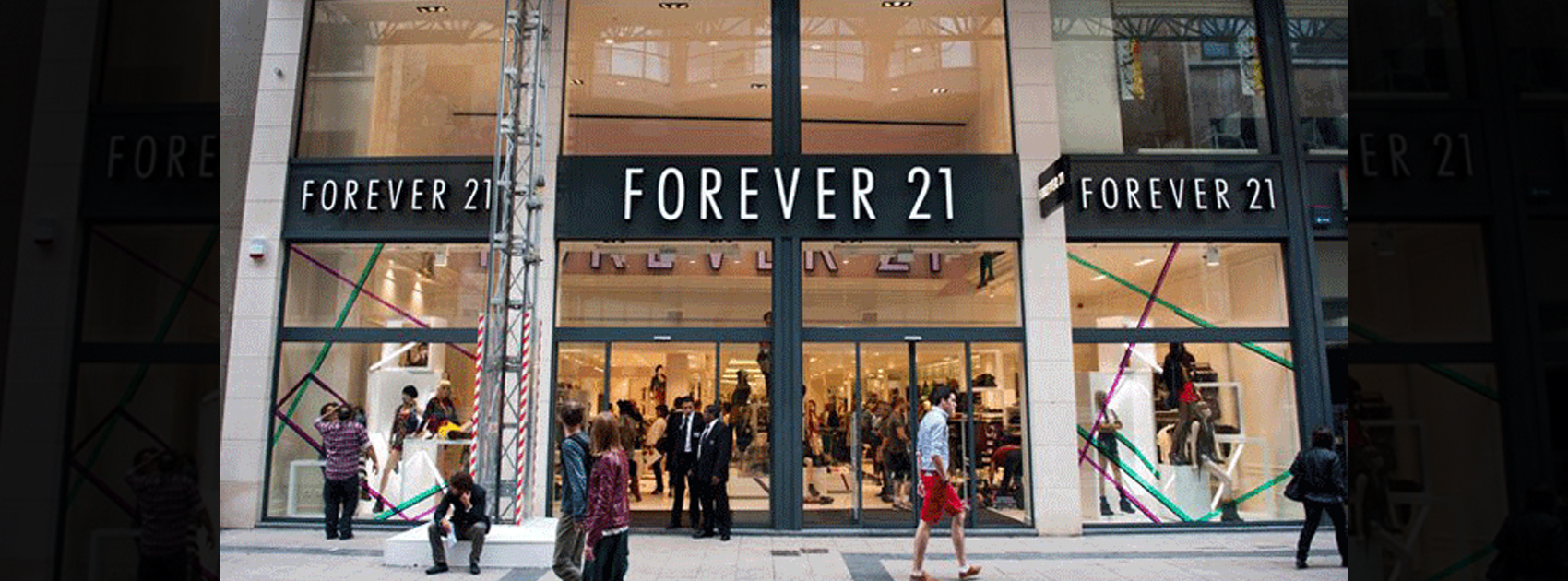
Forever 21, the California based fast fashion retailer, announced it filed for Chapter 11 bankruptcy. The retailer cited the decline in mall shoppers, expensive leases and rapid expansion as the reason behind the Company’s diminishing numbers.
The Company also announced it would stop operations in Asia and Europe, however, will continue to operate in Mexico and Latin America. Additionally, the Company will be closing up to 178 stores in the U.S.A. alone, in an attempt to restructure its business. Forever 21 secured an amount of $ 350 million in funds, of which $ 275 million was loaned by its existing lender, JP Morgan Chase.
Linda Chang, the Executive Vice President of the Company and the daughter of Forever 21 founders, said, “This was an important and necessary step to secure the future of our Company, which will enable us to reorganize our business and reposition Forever 21.”
Forever 21 was founded in 1984 by a married couple, Do Won Chang and Jin Sook Chang, who immigrated from South Korea to the United States. Do Won Chang and Jin Sook Chang worked as a dishwasher and a hairdresser respectively and managed to save $ 11,000 in three years. They used this amount to open the first Forever 21 shop. The retail shop became quite popular as it offered fashionable clothing at a cheap rate and sales reached $ 700,000 in the first year alone.
As the popularity of the store rose, the founders slowly started expanding and opened a new Forever 21 store every six months. The number of Forever 21 stores saw a sharp increase in the last decade. By 2018, the Company had more than 800 stores worldwide.
However, Forever 21 saw a sharp decline in its fortunes in recent years. With consumers preferring to shop online, the stores had trouble attracting customers. This, combined with the Company’s ever expanding number of stores worldwide, resulted in Forever 21 suffering from a huge revenue loss. The loss suffered by the Company also resulted in its founders being dropped from Forbes’ billionaires list in 2019.
By filing for bankruptcy, Forever 21 joined a long list of retailers whose businesses have been affected by the changing retail industry, resulting in them declaring bankruptcy.








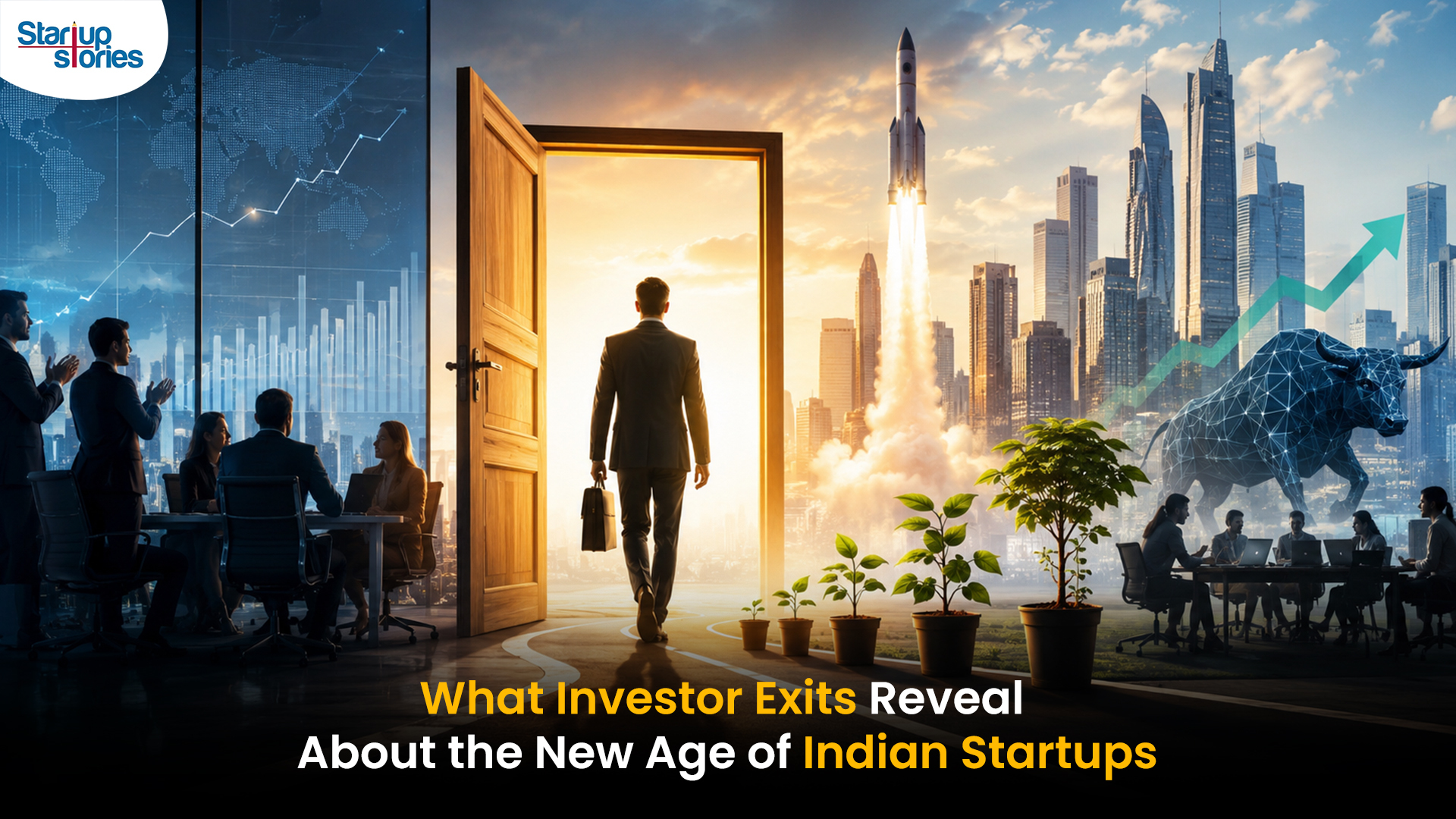
A decade ago, the success of a startup was measured largely by its ability to raise capital. Today, a different metric is gaining importance: the ability to generate meaningful exits for investors. Large stake sales by early backers are becoming increasingly common, not because growth opportunities have disappeared, but because India’s startup ecosystem is entering a more mature phase where capital is expected to complete its full cycle from investment to returns.
This evolution is particularly significant for consumer brands that have successfully blended technology, retail, and strong brand-building. Companies that were once viewed as high-risk startup bets are now attracting institutional investors capable of absorbing large transactions. Such developments indicate that these businesses are no longer being valued solely on future potential; they are increasingly being assessed on operational performance, market leadership, and long-term profitability. In many ways, investor exits are becoming a validation of a company’s ability to create lasting enterprise value.
The broader implication extends beyond a single company or investor. Successful exits encourage more global capital to enter India’s startup ecosystem because they demonstrate that liquidity opportunities exist at scale. As more venture-backed companies approach public listings, secondary transactions, or strategic investments, the focus of founders and investors alike may shift from chasing headline valuations to building durable businesses. The next chapter of India’s startup journey will likely be defined not just by the creation of unicorns, but by the creation of companies capable of delivering sustained returns to all stakeholders.

Apple has unveiled the new MacBook Air with M5 chip, starting at $999 for 13-inch and $1,299 for 15-inch models. The MacBook Air M5 boasts a 2nm M5 chip with 12-core CPU, 18-core GPU, and 50 TOPS Neural Engine for seamless AI tasks like real-time translation and 8K editing. Up to 22 hours of battery life, Thunderbolt 5, and Wi-Fi 7 make it the ultimate ultraportable, now 10% thinner at 0.44 inches with fanless cooling.
Key MacBook Air M5 features include Liquid Retina XDR display (500 nits, nano-texture option), 12MP Center Stage camera, and six-speaker Spatial Audio. Colors like new Sky Blue join Midnight and Starlight. Pre-orders are live today, with macOS Sequoia 15.4 enhancing Apple Intelligence and iPhone Continuity for students, pros, and remote workers.
Why buy MacBook Air M5 now? It outpaces Snapdragon X Elite rivals with ecosystem magic and future-proof performance, eyeing top 2026 laptop sales. CEO Tim Cook calls it “more capable than ever.” Visit apple.com for M5 MacBook deals and specs.

Delhi NCR-based gaming startup Zupee has acquired Mumbai-based microdrama platform Vertical TV in a deal valued under INR 40 Cr. This move strengthens Zupee Studio, its short-video arm launched in September 2025, by integrating Vertical TV’s expertise in bite-sized dramas like romance and thrillers.
Facing challenges from India’s 2025 real-money gaming ban, Zupee valued at $1 Bn after raising $120 Mn has pivoted to non-gaming content, including recent layoffs of 40% of its workforce. The acquisition builds on its November 2025 purchase of Australian AI firm Nucanon for interactive storytelling, targeting its 200 Mn+ users with engaging, mobile-first formats.
This deal underscores the rising microdrama trend in India, helping Zupee diversify amid regulatory pressures and compete in the short-video space dominated by quick, shareable content for on-the-go audiences.


