
Latest News
Ivanka Trump at the Global Entrepreneurship Summit 2017, Day 2

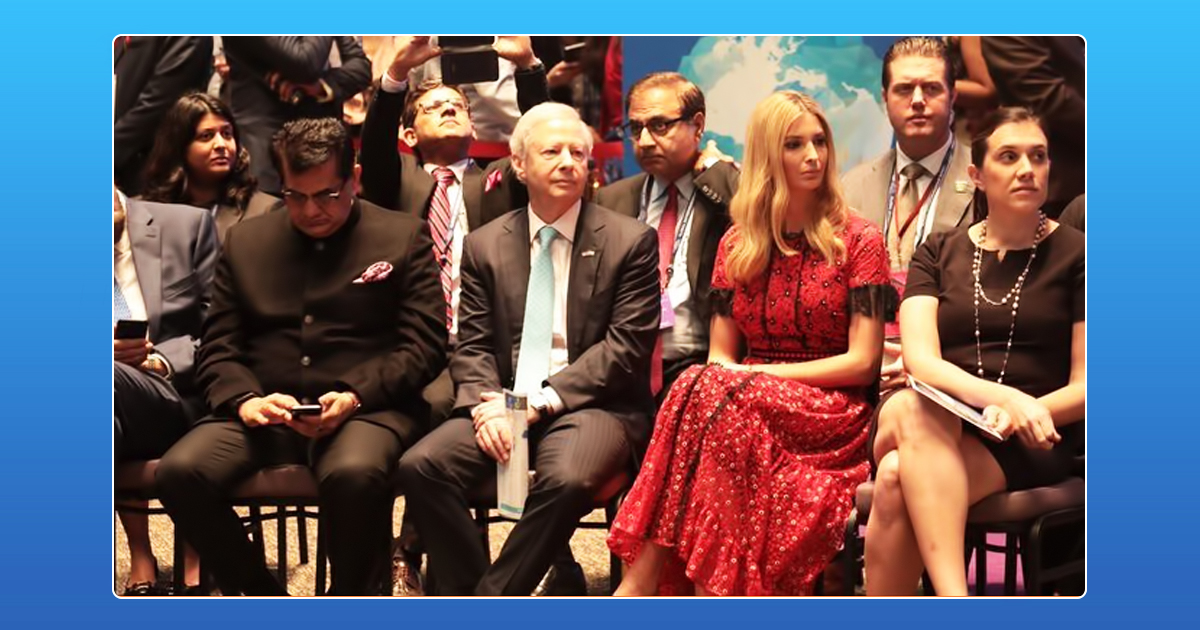
Ivanka Trump started the second day of the summit with a plenary session on the issue ‘Innovations in Workforce Development and Skills Training.’ The daughter of US President Donald Trump and his chief advisor Ms. Trump, was one of the panelists along with the MD and CEO of ICICI Bank Chanda Kochhar and British barrister and lecturer Cherie Blair. The panel was moderated by Executive Vice President and Chief Customer Officer of Dell Karen Quintos.
Hyderabad’s Hon. IT Minister Mr. K.T. Rama Rao introduced the panelists for the plenary session which was aimed at boosting female participation in innovation and improving their access to skills, training, education and career counseling. Speaking about the need for women in entrepreneurship roles, Ms. Trump said, “Women make up half of the world’s population. We need to think of these issues not as women’s issues but as human issues. Having equal gender representation is a financial positive to businesses today besides being a social responsibility.”
According to Chanda Kochhar, there is no other country in the world other than India where 40% of the banking sector is headed by women, however, not even 25% of graduate women participate in the workforce. The panel discussion was centered around creating awareness and encouraging women to take up the tremendous opportunities that technology offers entrepreneurs. “It’s the desire, support and ecosystem of the organization where women work that will help them break the glass ceiling. Recognition of work keeps us going,” Ms. Kochchar added.
Stressing on the need for men to be a part of the discussion, Dell’s CCO Karen Quintos said, “The biases that exist in society have to be addressed and men need to be a part of that conversation. Business outcomes are great when you have diverse thinking.”
Founder of the Cherie Blaire Foundation, Cherie Blaire, speaking about working women said, “We have to find solutions so women can do better at what they do without giving up on their enterprises. Capacity, confidence, capital – the three things women entrepreneurs need to flourish.”
Along with the captivating panel discussion regarding gender gap in entrepreneurship, GES 2017 also hosted a panel discussion on the value of mentors, sponsors and networks in maximizing entrepreneurs’ potential and driving entrepreneurship in sports. Harsha Bhogle moderated the panel discussion regarding entrepreneurship in sports with Sania Mirza, Pullela Gopichand, Mithali Raj and Chatri Sityodtong as the panelist.
The recently crowned Ms. World Manushi Chhillar also attended the summit and spoke about the importance of women entrepreneurs and the need for both men and women to be treated equally.
Miss World @ManushiChhillar at #GES2017 to #womentrepreneurs: You don’t need to be Miss World to make a difference. @RonnieScrewvala pic.twitter.com/TLmhkGZv0Q
— GES2017 (@GES2017) November 29, 2017
Miss World @ManushiChhillar is about to share her views on #WomenAtWork at #GES2017. Watch her LIVE here: https://t.co/LL9QPn1Y55 @MissWorldLtd pic.twitter.com/jM2YH2hJLC
— GES2017 (@GES2017) November 29, 2017
Despite the focus on women entrepreneur and women empowerment, a 13 year old Australian entrepreneur stole the show at the summit with his five apps. This talented app developer Hamish Finlayson is an autistic child which is a serious development disorder impairing the ability to communicate or interact. Despite the disability, this class & student from Queensland has developed an app for helping people with autism spectrum disorder (ASD) and four more environmental apps. Hamish has strong values and hopes his apps can someday change the world for the better. But he strongly believes education comes first and saving the world later.






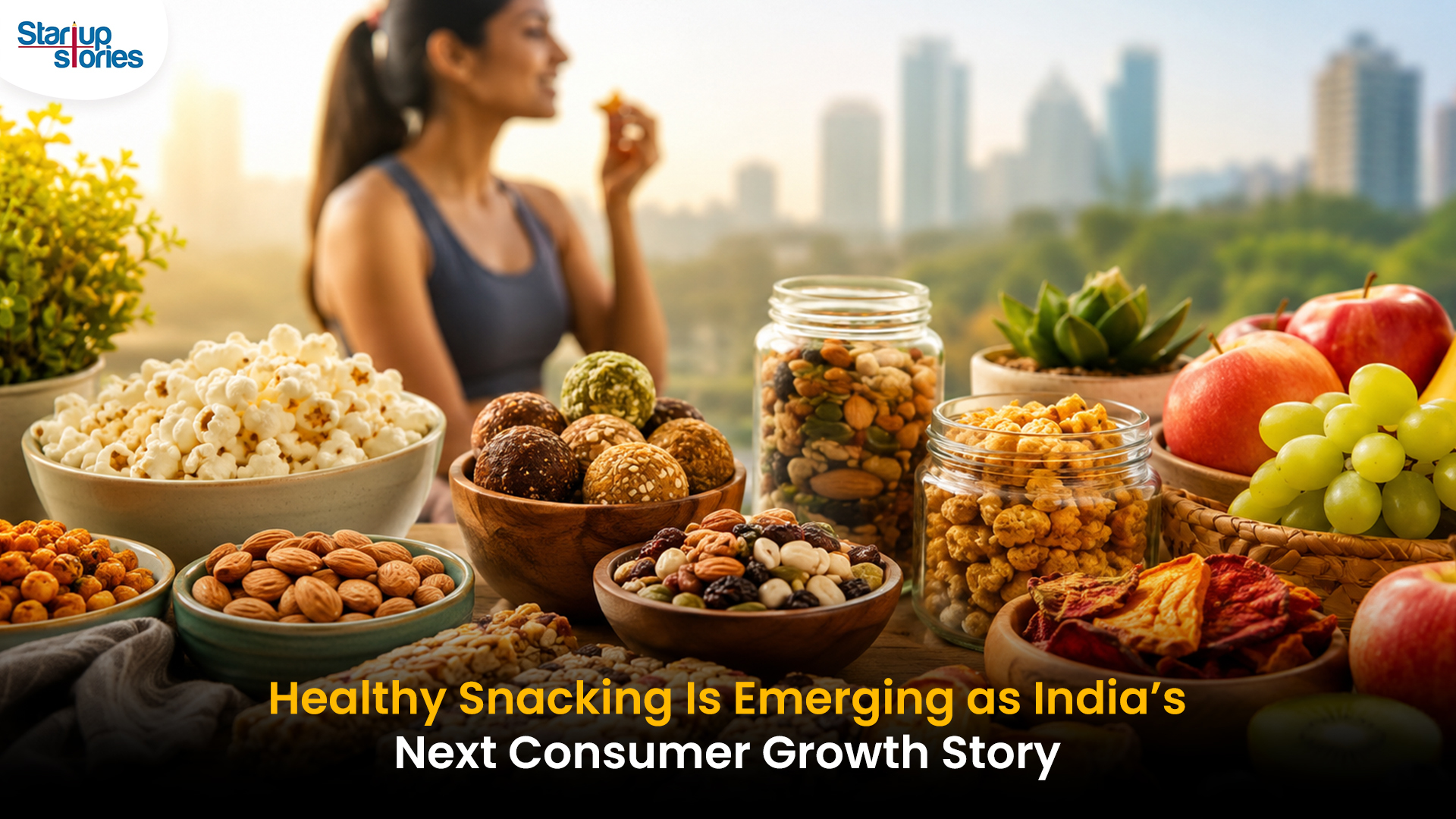
The healthy snacking category in India is no longer a niche trend it is steadily becoming a mainstream consumer movement. The latest funding momentum around brands like Phab highlights how investors are increasingly backing companies that sit at the intersection of health, convenience, and modern lifestyles. As urban consumers become more conscious of ingredients, nutrition, and long-term wellness, demand is shifting away from traditional packaged snacks toward products that promise both taste and better nutritional value.
What makes this market particularly attractive is its ability to create recurring consumer habits. Unlike many direct-to-consumer categories that rely heavily on one-time purchases, healthy snacks naturally fit into daily routines. This opens opportunities for brands to build stronger customer loyalty while expanding into adjacent categories such as protein-rich foods, functional beverages, and wellness-focused products. The competition is no longer about selling snacks it is about owning a larger share of the consumer’s health journey.
Looking ahead, the biggest winners may not be the brands with the widest product portfolios, but those that can balance nutrition, affordability, and taste at scale. As health-conscious consumption expands beyond metro cities, India’s better-for-you food segment could evolve into one of the country’s most significant consumer categories. The growing flow of capital into this space signals that investors are betting on a long-term behavioral shift rather than a short-lived food trend.
India’s fintech sector is entering a new phase of growth, and the spotlight is increasingly shifting toward underserved consumers in smaller cities and towns. The recent funding secured by WeRize reflects growing investor confidence in platforms that are expanding access to financial products such as credit, insurance, and other services for customers who have traditionally remained outside the reach of formal financial institutions. As digital adoption deepens across the country, fintech companies are finding significant opportunities beyond metro markets.
What makes this trend notable is the industry’s transition from simply enabling digital payments to building broader financial ecosystems. Rather than focusing on a single service, fintech firms are expanding their product portfolios to meet multiple customer needs under one platform. This approach not only strengthens customer relationships but also creates more sustainable business models by increasing engagement and lifetime value.
The larger implication is that India’s next fintech growth story may be driven by financial inclusion rather than convenience alone. Investors are increasingly backing companies that combine technology, data-driven underwriting, and localized distribution to serve emerging consumer segments. As competition intensifies, the ability to build trust, offer relevant products, and address the financial needs of Bharat could become a key differentiator for the next generation of fintech leaders.

OpenAI’s introduction of trusted contact safeguards for potential self-harm cases reflects a major evolution in AI responsibility.
Beyond Moderation
AI safety is shifting from simply blocking harmful content to actively supporting user wellbeing through:
- early risk detection
- human-centered intervention
- stronger emotional safety frameworks
This positions AI as more than an information tool—it becomes part of broader digital support systems.
Key Industry Impact
Trusted contact models could influence future safety standards across:
- AI assistants
- mental health platforms
- social media
- digital health services
The Bigger Challenge
While promising, success depends on balancing:
- privacy
- consent
- ethical intervention
- user trust
Final Take
This move signals that the future of AI safety may rely not just on preventing harmful responses, but on building more responsible, human-connected support systems.

Common Governance Challenges Faced by Nonprofit Organizations in India

How Lenskart Made Indians Comfortable Buying Glasses Online


