
Latest News
Arata Secures $4 Million in Funding Led by Unilever Ventures

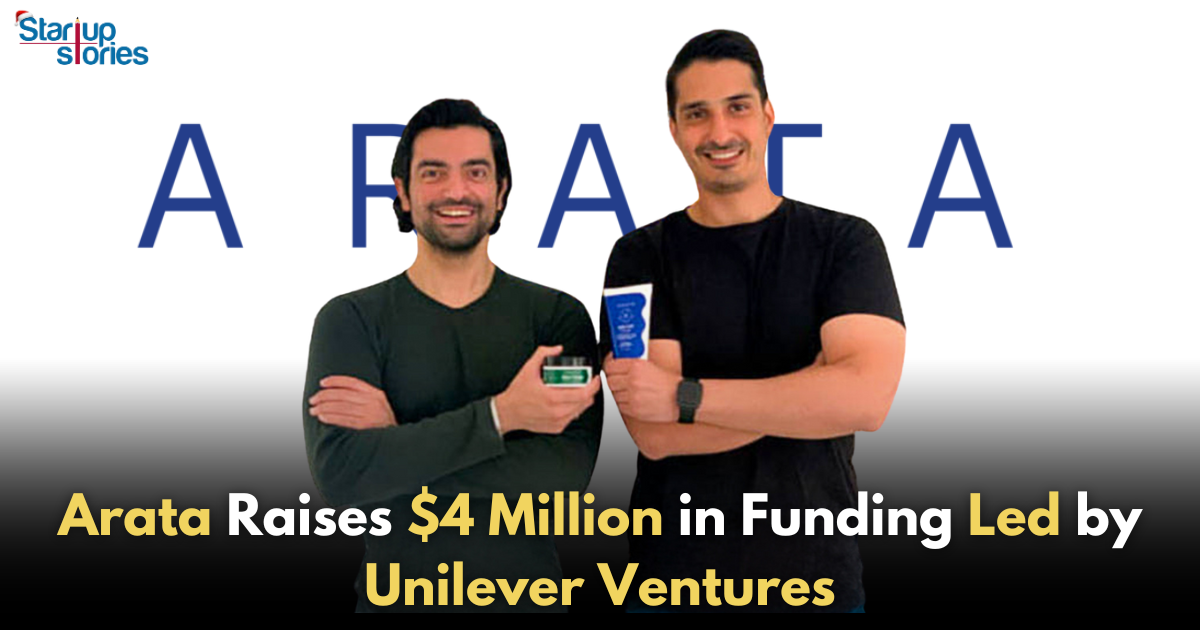
Arata, a leading hair care brand in India, has successfully raised $4 million in a new funding round led by Unilever Ventures, the venture capital arm of Unilever. This funding round also saw participation from L’Oréal’s corporate venture capital fund, BOLD, and existing investor Skywalker Family Office.
Purpose of the Funding
Arata plans to utilize the newly acquired funds to:
- Invest in research and development for innovative hair care solutions.
- Expand its consumer research efforts to better understand market needs.
- Strengthen its distribution channels across various platforms, including its own website, quick-commerce platforms, and major e-commerce marketplaces.
Co-founders Dhruv Bhasin and Dhruv Madhok expressed their enthusiasm for the funding, stating, “This funding will allow us to continue our mission of building India’s most beloved hair beauty brand.”
Strategic Insights
Pawan Chaturvedi, Partner & Head-Asia at Unilever Ventures, highlighted the potential for growth within Arata, stating, “With a strong innovation pipeline and a solid foundation, Arata is poised for significant growth in the coming years, and we are thrilled to be a part of this journey.” This investment underscores the increasing interest from major consumer goods companies in the Indian beauty and personal care market.
Market Context
Founded in 2018, Arata has emerged as a key player in India’s personal care segment, specializing in solutions tailored for various hair types. The brand addresses diverse needs including:
- Hair growth
- Dandruff treatment
- Styling
- Maintenance for straight, wavy, and curly hair
Arata’s products are crafted with advanced ingredients specifically designed for Indian hair types 1, 2, and 3.
Competitive Landscape
In a rapidly growing market that includes established competitors like WOW Skin Science, Pilgrim, and Mamaearth, Arata’s focus on innovation and consumer-centric solutions positions it well for success. The direct-to-consumer (D2C) model allows Arata to engage directly with its customer base while maintaining control over branding and customer experience.
Growth Metrics
Arata currently serves over 1.5 million customers annually and has achieved an impressive annual revenue run rate (ARR) of ₹72 crore, marking a threefold growth over the past year. Approximately 30% of its total sales come from its D2C website, while the remaining 70% are driven by other channels such as:
- Quick-commerce platforms like Zepto, Blinkit, and Swiggy Instamart
- E-commerce marketplaces including Amazon, Nykaa, and Flipkart
Conclusion
The $4 million funding secured by Arata represents a significant milestone in its journey to become a leading player in India’s hair care industry. With strong backing from prominent investors and a clear strategy focused on innovation and consumer engagement, Arata is well-positioned to capitalize on the growing demand for effective hair care solutions. As it continues to expand its product offerings and distribution channels, Arata aims to solidify its status as a go-to brand for Indian consumers seeking high-quality hair care products.








The healthy snacking category in India is no longer a niche trend it is steadily becoming a mainstream consumer movement. The latest funding momentum around brands like Phab highlights how investors are increasingly backing companies that sit at the intersection of health, convenience, and modern lifestyles. As urban consumers become more conscious of ingredients, nutrition, and long-term wellness, demand is shifting away from traditional packaged snacks toward products that promise both taste and better nutritional value.
What makes this market particularly attractive is its ability to create recurring consumer habits. Unlike many direct-to-consumer categories that rely heavily on one-time purchases, healthy snacks naturally fit into daily routines. This opens opportunities for brands to build stronger customer loyalty while expanding into adjacent categories such as protein-rich foods, functional beverages, and wellness-focused products. The competition is no longer about selling snacks it is about owning a larger share of the consumer’s health journey.
Looking ahead, the biggest winners may not be the brands with the widest product portfolios, but those that can balance nutrition, affordability, and taste at scale. As health-conscious consumption expands beyond metro cities, India’s better-for-you food segment could evolve into one of the country’s most significant consumer categories. The growing flow of capital into this space signals that investors are betting on a long-term behavioral shift rather than a short-lived food trend.

India’s fintech sector is entering a new phase of growth, and the spotlight is increasingly shifting toward underserved consumers in smaller cities and towns. The recent funding secured by WeRize reflects growing investor confidence in platforms that are expanding access to financial products such as credit, insurance, and other services for customers who have traditionally remained outside the reach of formal financial institutions. As digital adoption deepens across the country, fintech companies are finding significant opportunities beyond metro markets.
What makes this trend notable is the industry’s transition from simply enabling digital payments to building broader financial ecosystems. Rather than focusing on a single service, fintech firms are expanding their product portfolios to meet multiple customer needs under one platform. This approach not only strengthens customer relationships but also creates more sustainable business models by increasing engagement and lifetime value.
The larger implication is that India’s next fintech growth story may be driven by financial inclusion rather than convenience alone. Investors are increasingly backing companies that combine technology, data-driven underwriting, and localized distribution to serve emerging consumer segments. As competition intensifies, the ability to build trust, offer relevant products, and address the financial needs of Bharat could become a key differentiator for the next generation of fintech leaders.

OpenAI’s introduction of trusted contact safeguards for potential self-harm cases reflects a major evolution in AI responsibility.
Beyond Moderation
AI safety is shifting from simply blocking harmful content to actively supporting user wellbeing through:
- early risk detection
- human-centered intervention
- stronger emotional safety frameworks
This positions AI as more than an information tool—it becomes part of broader digital support systems.
Key Industry Impact
Trusted contact models could influence future safety standards across:
- AI assistants
- mental health platforms
- social media
- digital health services
The Bigger Challenge
While promising, success depends on balancing:
- privacy
- consent
- ethical intervention
- user trust
Final Take
This move signals that the future of AI safety may rely not just on preventing harmful responses, but on building more responsible, human-connected support systems.

Common Governance Challenges Faced by Nonprofit Organizations in India

How Lenskart Made Indians Comfortable Buying Glasses Online


JosephInalf
April 12, 2026 at 3:19 am
флаг на заказ спб изготовить флаг на заказ
AndrewTwify
April 15, 2026 at 3:40 am
мебель из массива мебель на заказ из массива дерева
LamontRic
April 16, 2026 at 4:23 am
Читать далее: https://zhukovastudio.ru
Rhondawag
May 19, 2026 at 11:44 pm
What’s up people, been on Leztruvin and tbh it’s not bad. Didn’t believe it at first however the numbers speak. What do you think?
Honda#gen[OretyrysEP,225,556]
May 29, 2026 at 5:11 pm
Look I’m on Peluxiv roughly 3 weeks and well… results are there. Obviously you won’t get rich however you make something. The AI handles it pretty well. link here: Peluxiv
sfokcertopsde
June 25, 2026 at 10:44 pm
I’ve recently started a web site, the information you offer on this website has helped me greatly. Thanks for all of your time & work. “The only winner in the War of 1812 was Tchaikovsky” by Solomon Short.