
Artificial Intelligence
Google Unveils Veo 2: A New Era of AI Video Generation!

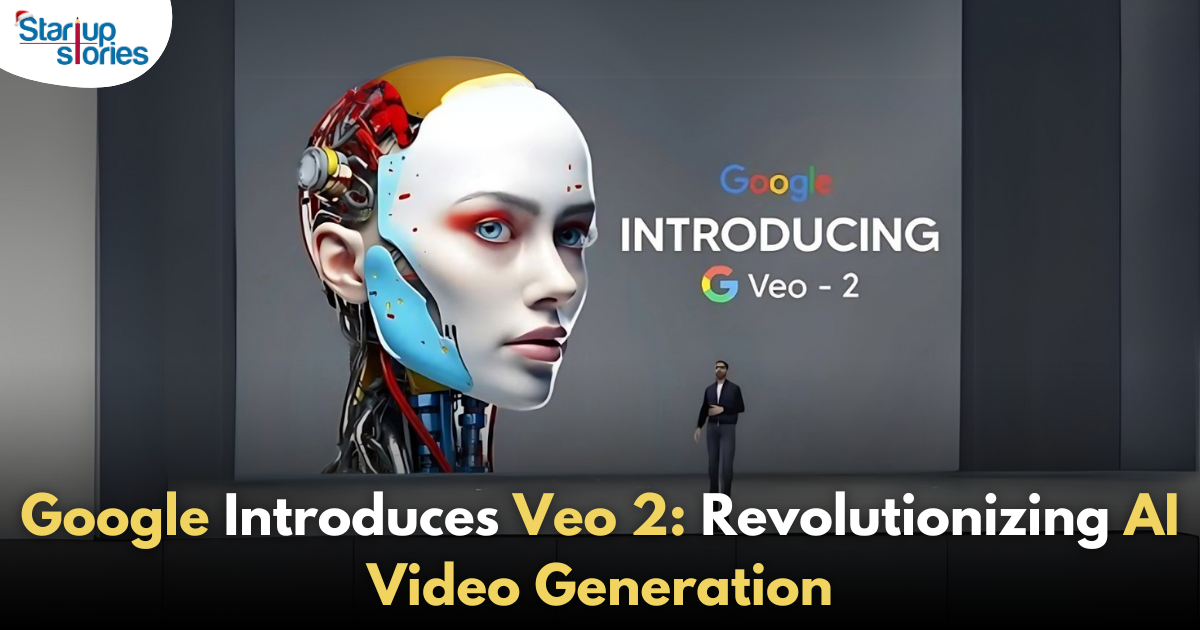
Google has made significant strides in the field of AI with the introduction of its latest video generation model, Veo 2. Designed to rival OpenAI’s Sora, Veo 2 promises to deliver hyper-realistic, high-quality videos in 4K resolution, marking a notable advancement in AI-generated content.
Key Features of Veo 2
- Realistic Motion: Veo 2 excels in generating videos with natural and fluid movements, simulating real-world physics and human dynamics. This improvement allows for more lifelike representations in generated videos.
- High-Quality Output: The model produces stunning visuals with intricate details and vibrant colors, enhancing the overall viewing experience. Users can expect videos that not only look good but also convey a sense of realism.
- Benchmark Performance: Google claims that Veo 2 outperforms other leading video generation models based on human preference evaluations. In head-to-head comparisons, it was preferred by 59% of participants over OpenAI’s Sora, which garnered only 27%.
- Extended Video Lengths: Unlike many competitors, Veo 2 can generate videos longer than two minutes, significantly enhancing its utility for creators looking to produce more comprehensive content.
Advanced Capabilities
Veo 2 is integrated into Google Labs’ video generation tool, VideoFX, and includes several advanced features:
- Cinematic Effects: Users can specify cinematic jargon such as lens types and shot angles (e.g., low-angle tracking shots or close-ups), allowing for tailored video outputs that meet specific creative requirements.
- Complex Scene Generation: The model can process complex requests, including genre specifications and cinematic effects, making it versatile for various applications from entertainment to education.
Imagen 3 and Whisk: A Powerful Image Creation Duo
Alongside Veo 2, Google has introduced two additional models:
- Imagen 3: This versatile image generation model is capable of producing a wide range of styles, from photorealistic to abstract. It has been improved to deliver brighter and better-composed images.
- Whisk: This new experimental tool allows users to create new images by combining multiple input images, enabling unique output styles and creative possibilities.
Addressing Challenges in AI Video Generation
While these advancements are impressive, challenges remain in creating complex scenes with intricate motion and maintaining consistency throughout a video. Google acknowledges these hurdles but is committed to ongoing research and development to enhance the capabilities of its AI models further.
Safety Measures
To combat misinformation and ensure proper attribution, all videos generated by Veo 2 will include a visible and invisible watermark called SynthID. This feature is part of Google’s commitment to responsible AI development, helping to identify AI-generated content and mitigate potential misuse.
Future Prospects
As these tools become more accessible, they have the potential to revolutionize various industries, including entertainment, advertising, and education. The integration of Veo 2 into platforms like YouTube Shorts is planned for 2025, further expanding its reach and impact.
Conclusion
Google’s introduction of Veo 2 marks a significant leap forward in AI video generation technology. With its ability to produce high-quality, realistic videos and advanced cinematic capabilities, Veo 2 is set to reshape content creation across multiple sectors. As Google continues to innovate in this space, the future of AI-generated content looks promising—provided that ethical considerations are prioritized alongside technological advancements.






UAE-based G42 has announced plans to deploy an 8 exaflop AI supercomputer in India, announced at the AI Impact Summit 2026 in Delhi. This national-scale project partners with Cerebras, MBZUAI, and India’s C-DAC, operating under full Indian data sovereignty as part of the India AI Mission.
The supercomputer boosts sovereign AI capabilities, enabling startups, researchers, academics, SMEs, and government access for tailored applications like public services and language tech. G42 India CEO Manu Jain highlighted its role in making India AI-native while prioritizing security.
This follows India-UAE tech pacts in late 2025, positioning India among global leaders in exaflop AI infrastructure amid rising demand for localized compute. Cerebras CSO Andy Hock noted it will accelerate large model training for India-specific needs.
Artificial Intelligence
Adopt AI Secures $6 Million to Power No-Code AI Agents for Business Automation

Adopt AI, a San Jose and Bengaluru-based agentic AI startup, has raised $6 million in seed funding led by Elevation Capital, with participation from Foster Ventures, Powerhouse Ventures, Darkmode Ventures, and angel investors. The funding will be used to expand the company’s engineering and product teams and to scale enterprise deployments of its automation platform.
Founded by Deepak Anchala, Rahul Bhattacharya, and Anirudh Badam, Adopt AI offers a platform that lets businesses automate workflows and execute complex actions using natural language commands, without needing to rebuild existing systems. Its core products include a no-code Agent Builder, which allows companies to quickly create and deploy AI-driven conversational interfaces, and Agentic Experience, which replaces traditional user interfaces with text-based commands.
The startup’s technology is aimed at SaaS and B2C companies in sectors like banking and healthcare, helping them rapidly integrate intelligent agent capabilities into their applications. Adopt AI’s team includes engineers from Microsoft and Google, with Chief AI Officer Anirudh Badam bringing over a decade of AI experience from Microsoft.
The company has also launched an Early Access Program to let businesses pilot its automation solution and collaborate on new use cases.
Social media platforms are intensifying efforts to combat the misuse of deepfake technology by advocating for mandatory AI labeling and clearer definitions of synthetic content. Deepfakes, created using advanced artificial intelligence, pose significant threats by enabling the spread of misinformation, particularly in areas like elections, politics, and personal privacy.
Meta’s New Approach
Meta has announced expanded policies to label AI-generated content across Facebook and Instagram. Starting May 2025, “Made with AI” labels will be applied to synthetic media, with additional warnings for high-risk content that could deceive the public. Meta also requires political advertisers to disclose the use of AI in ads related to elections or social issues, aiming to address concerns ahead of key elections in India, the U.S., and Europe.
Industry-Wide Efforts
Other platforms like TikTok and Google have introduced similar rules, requiring deepfake content to be labeled clearly. TikTok has banned deepfakes involving private figures and minors, while the EU has urged platforms to label AI-generated media under its Digital Services Act guidelines.
Challenges Ahead
Despite these measures, detecting all AI-generated content remains difficult due to technological limitations. Experts warn that labeling alone may not fully prevent misinformation campaigns, especially as generative AI tools become more accessible.
Election Implications
With major elections scheduled in 2025, experts fear deepfakes could exacerbate misinformation campaigns, influencing voter perceptions. Social media platforms are under pressure to refine their policies and technologies to ensure transparency while safeguarding free speech.

Common Governance Challenges Faced by Nonprofit Organizations in India

How Lenskart Made Indians Comfortable Buying Glasses Online


rentry.co
May 31, 2026 at 11:07 am
References:
Casino new orleans rentry.co
sfokcertopsde
June 26, 2026 at 4:24 pm
Great blog here! Also your website loads up very fast! What host are you using? Can I get your affiliate link to your host? I wish my website loaded up as quickly as yours lol