
News
5 Amazing Technologies Required For A Software Startup


By the time you implement your amazing Startup idea, you realize that there already exist a handful of people in the Startup bucket swimming across with their new innovation ideas.
Yes, the young entrepreneurs must be quick to implement what is there in the minds. Well, this is impossible without technology gimmicks. There are millions of technologies which make the life of a startup go smoother.
Here we make a compiled list of such technologies that Startups are using to change the world.
1) JSON

- This stands for JavaScript Object Notification. This is a lightweight data interchange format which is easy for humans to read and write. JSON is a text format that is completely language independent but uses conventions familiar to programmers of the C-family of languages.
- JSON is useful for exchanging and retrieving data that needs to be manipulated or mashed up.
- Previously, people have been using XML for interchanging data but this is accompanied with some bumps. However, JSON seamlessly communicates with each other.
2) Ruby On Rails

- Preferably called as RoR, is a server-side web application framework that provides default structures for a database, a web service, and a web page. On the whole, this helps to build a modern web application.
- Many applications like GitHub, BaseCamp, Airbnb, Twitch and SoundCloud had been built with the help of this framework.
- RoR is an open source software which is free to use and make best out of it.
- Powerful web applications which were built in a span of more than 20 days can be made in a single day with RoR.
Famous web applications like Twitter and Groupon are also using it.
3) NoSQL

- This technology can be used to store an enormous amount of data. NoSQL can be used to store as well as retrieve the stored data efficiently with the bulk of processing done at the interface layer.
- CouchDB, MongoDB, Redis, and Cassandra are a few popular NoSQL databases.
- One can store and retrieve large amount without affecting the performance.
- Social media giants like Facebook, Google, Twitter and Yahoo have been using this.
4) Django

- This is a complete high level web framework that encourages clean and rapid design. It ensures a hassle free web development so that you can be focused on your app. It’s free and an open source. It is ridiculously fast, reassuringly secure and exceedingly scalable.
- Just like RoR, you can make web applications in Django.
- Instagram, Pinterest, Disqus, and EventBrite have been using Django for its web development process.
5) Cloud Computing
- May be you all are aware of cloud computing. It is an internet based computing that provides shared computer processing resources and data.
- Cloud Computing provides users and enterprises with various capabilities to store and process their data in either privately owned or third party data centers.
- Cloud Computing enables the organizations to focus on their business instead of spending valuable time and money on computer infrastructure.
Pinterest, Airbnb, Quora and NASA have been using it.





Bengaluru, January 13, 2026 Dazzl, the D2C beauty startup revolutionizing AI personalized skincare India, secured $3.2 million in seed funding led by OYO founder Ritesh Agarwal’s venture arm. Co-investors include Snapdeal’s Rohit Bansal and Fireside Ventures, valuing Dazzl at $15 million post-money. Founded in 2024 by IIT alumni Priya Singh and Arjun Mehta, the app uses smartphone scans for custom serums, boasting 50,000+ users and ₹5 crore ARR amid India’s $25 billion beauty market surge.
Ritesh Agarwal praised Dazzl’s tech: “Personalization is beauty’s future, like OYO’s guest model.” Funds target R&D for 100+ skin profiles, Gujarat manufacturing under PLI, Instagram/Nykaa campaigns, and 50 hires. In a 20% YoY growing sector (Redseer 2025), Dazzl edges Mamaearth and Plum with 95% AI precision, 90% natural formulas, ₹499 kits, 65% retention (vs. 40% avg), and viral TikTok traction in 10 cities.
D2C beauty startup Dazzl tackles regulations via FSSAI compliance, eyeing $10B e-commerce beauty by 2028 and MENA exports. Q2 haircare launches and Series A loom, with Agarwal’s backing signaling unicorn potential for sustainable beauty products India. Dazzl blends AI with clean beauty for 500M+ consumers.
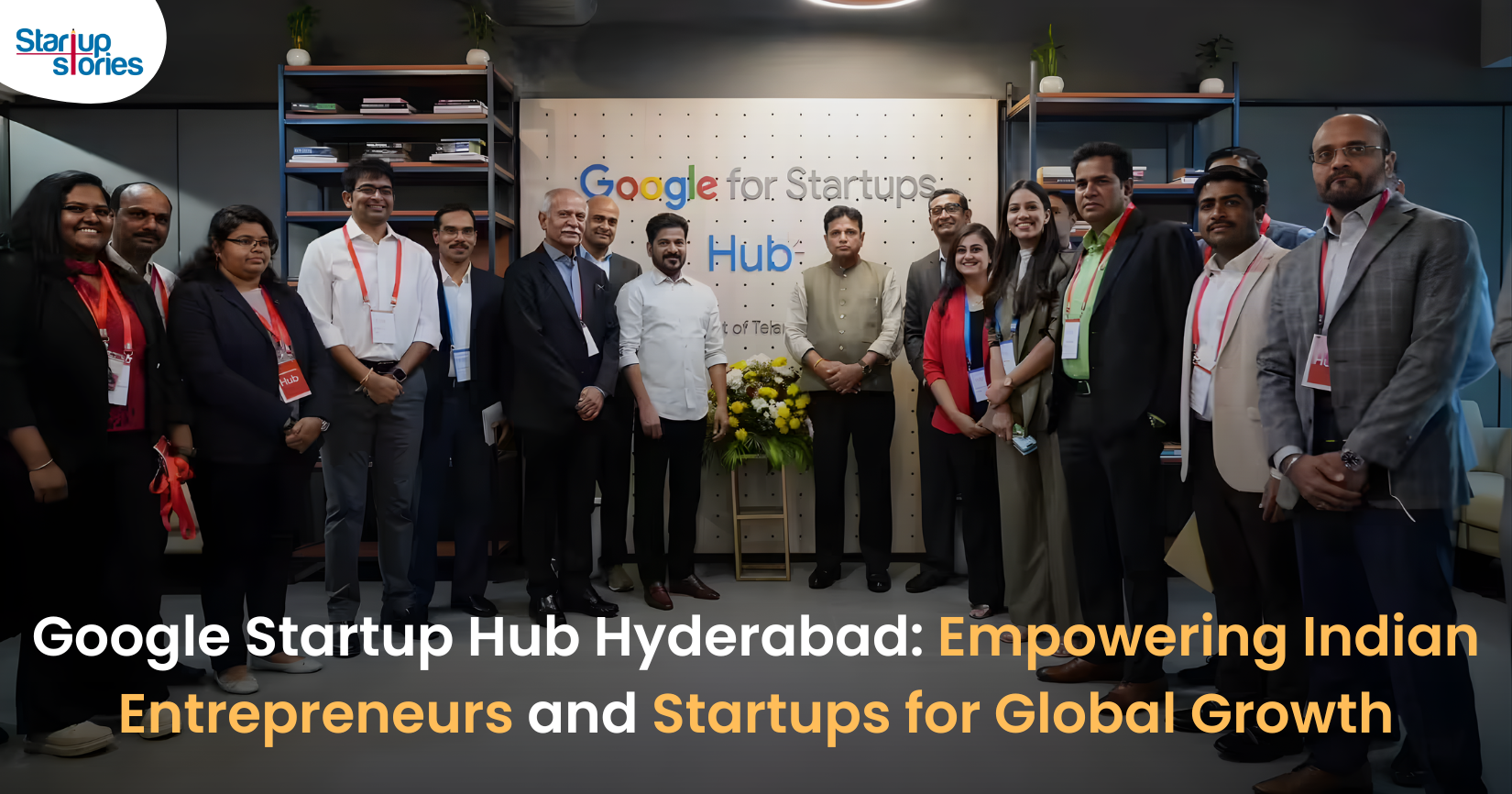
Google has launched the Google Startup Hub Hyderabad, a major step in strengthening India’s dynamic startup ecosystem. This new initiative aims to empower entrepreneurs, innovators, and developers by giving them access to Google’s global expertise, mentoring programs, and advanced cloud technology. The hub reflects Google’s mission to fuel India’s digital transformation and promote innovation through the Google for Startups program.
Located in the heart of one of India’s top tech cities, the Google Startup Hub in Hyderabad will host mentorship sessions, training workshops, and networking events designed for early-stage startups. Founders will receive Google Cloud credits, expert guidance in AI, product development, and business scaling, and opportunities to collaborate with Google’s global mentors and investors. This ecosystem aims to help Indian startups grow faster and compete globally.
With Hyderabad already home to tech giants like Google, Microsoft, and Amazon, the launch of the Google Startup Hub Hyderabad further cements the city’s position as a leading innovation and technology hub in India. Backed by a strong talent pool and robust infrastructure, this hub is set to become a growth engine for next-generation startups, driving innovation from India to global markets.
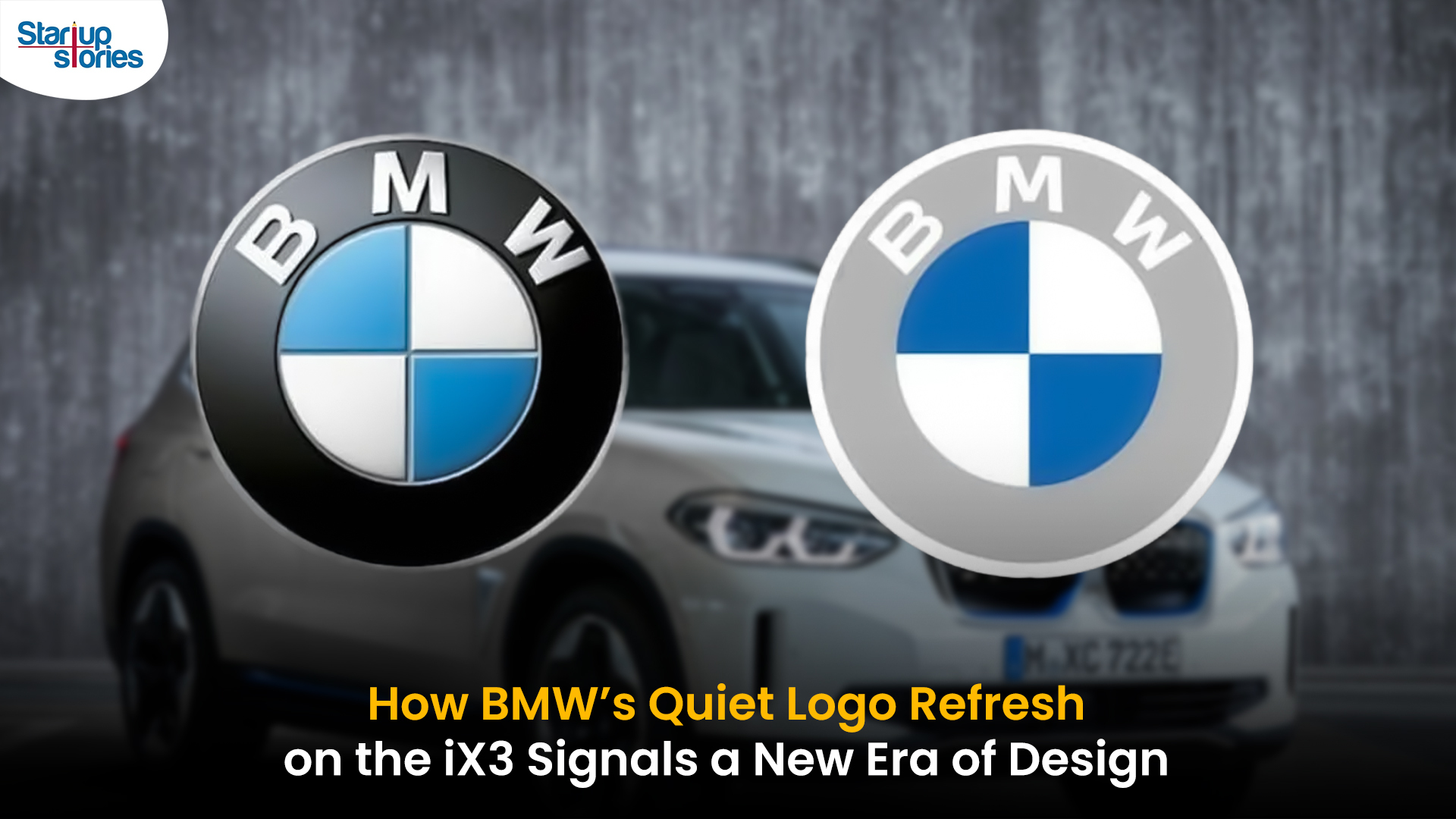
BMW quietly debuted its new logo on the all-electric iX3, marking a significant yet understated shift in the brand’s design direction for 2025. The updated emblem retains the classic roundel and Bavarian blue-and-white colors, but sharp-eyed enthusiasts noticed subtle refinements: the inner chrome ring has been removed, dividing lines between blue and white are gone, and the logo now features a contemporary satin matte black background with slimmer “BMW” lettering. These enhancements showcase BMW’s embrace of modern minimalism while reinforcing their commitment to premium aesthetics and the innovative Neue Klasse philosophy for future electric vehicles.
Unlike rival automakers that reveal dramatic logo changes, BMW’s refresh is evolutionary and respectful of tradition. The new badge ditches decorative chrome and blue borders associated with earlier electric models, resulting in a flatter, more digital-friendly design that mirrors recent branding seen in BMW’s digital communications. Appearing first on the iX3’s nose, steering wheel, and hub caps, this updated identity will gradually be adopted across all BMW models—both electric and combustion—signaling a unified brand language for years to come.
BMW’s strategic logo update represents more than just aesthetic reinvention—it underscores the brand’s dedication to future-ready mobility, design continuity, and a premium EV experience. As the new roundel begins rolling out on upcoming BMW vehicles, it stands as a testament to the automaker’s depth of detail and thoughtful evolution, offering subtle distinction for keen observers and affirming BMW’s iconic status in the ever-changing automotive landscape.

Common Governance Challenges Faced by Nonprofit Organizations in India

How Lenskart Made Indians Comfortable Buying Glasses Online


free-chip-no-deposit-casino.online-spielhallen.de
June 15, 2026 at 4:59 pm
References:
Fond du luth casino free-chip-no-deposit-casino.online-spielhallen.de
casino bonus ohne einzahlung
June 16, 2026 at 5:00 pm
References:
Virtual Casino 150 No Deposit Bonus casino bonus ohne einzahlung
https://futuremanager.nl/
June 17, 2026 at 12:17 pm
References:
Casino real estate https://futuremanager.nl/
Karamba Casino
July 4, 2026 at 2:44 pm
References:
Hard Rock Casino Biloxi Online Karamba Casino